Skip to content

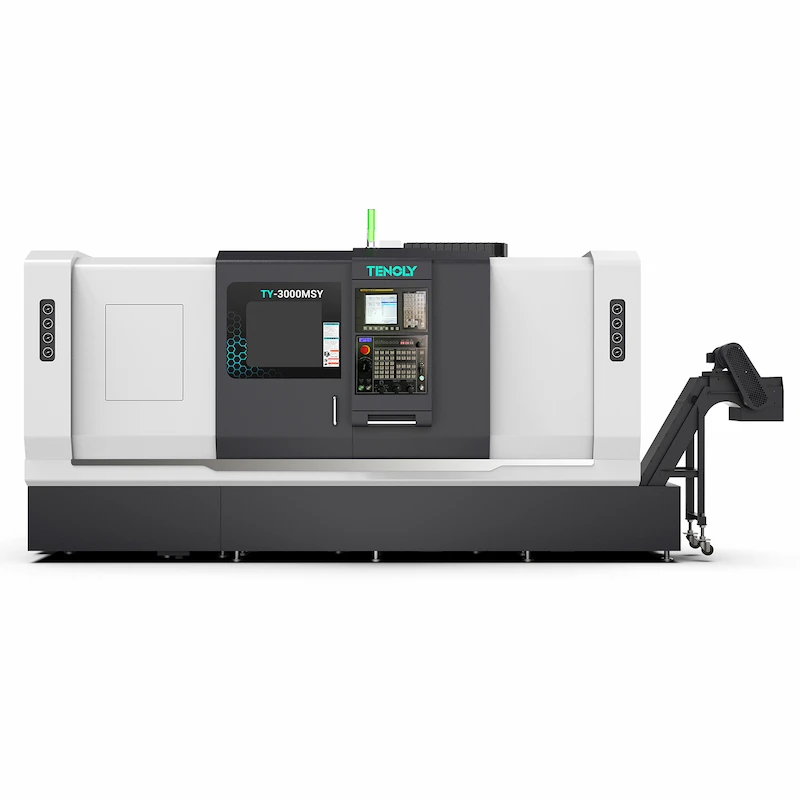
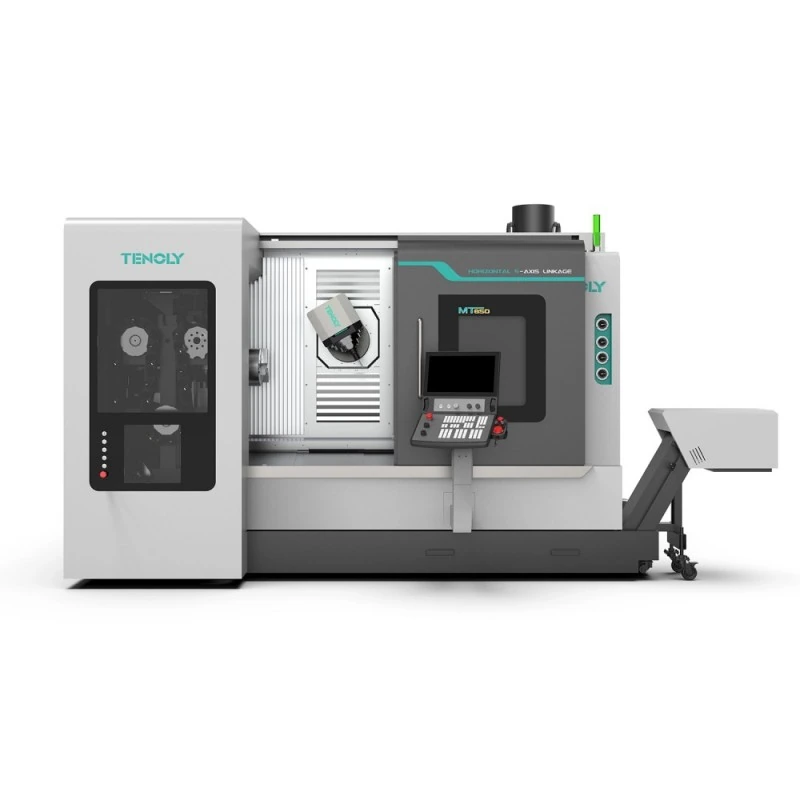
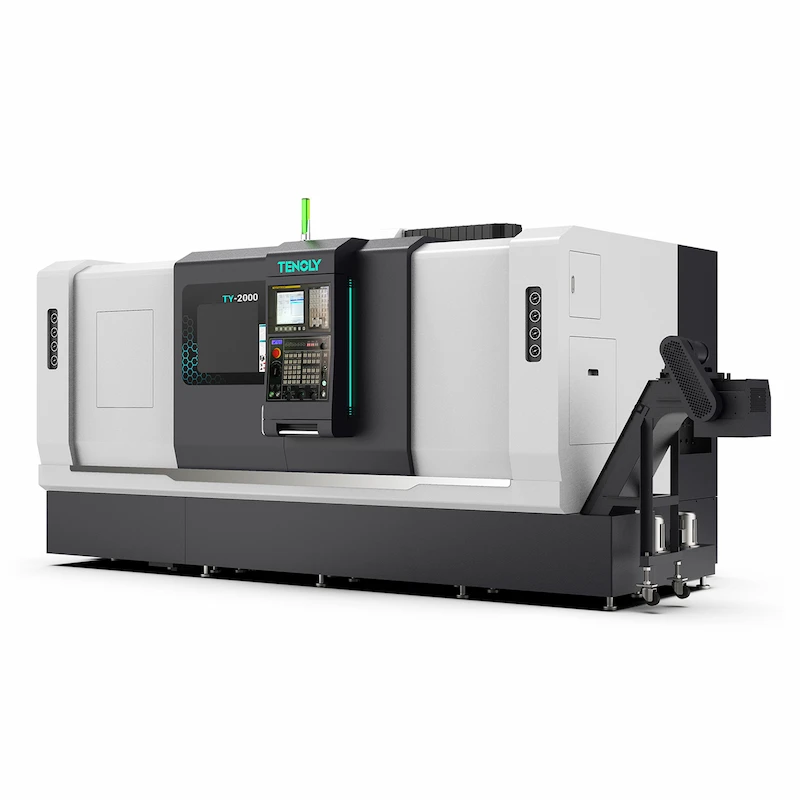
Double spindle CNC lathes significantly improve the efficiency, stability, and multi-process integration capabilities of high-precision machining through the parallel and collaborative machining of two spindles.

I. Increased Machining Efficiency
Dual-spindle CNC lathes possess two independent or collaborative spindle systems, enabling parallel machining of two or more operations. The core advantage lies in reducing the clamping, positioning, and tool-changing time between different workpiece operations. Specifically, this manifests as:
· Synchronous Machining Capability: While one workpiece is rough-machined on one spindle, the other spindle simultaneously performs finishing, milling, or drilling operations, achieving “parallel processing of preceding and following operations” and significantly shortening the overall machining cycle.
· Reduced Fixture Dependence: Multiple operations on the same workpiece on the same machine tool reduce the number of clamping operations and the accumulation of positioning errors, which is particularly beneficial for batch production.
· Reduced Human Intervention: Increased automation reduces the risk of human intervention and misoperation, improving workshop production cycle time and stability.
II. Enhancing Machining Accuracy and Consistency
In high-precision machining, a stable machining environment and high rigidity are crucial for ensuring machining quality. Dual-spindle lathes, through two spindles and a high-precision feed system, provide more stable machining conditions, specifically:
· Symmetry and Thermal Stability of the Twin Spindles: The symmetrical design and synchronous control of the two spindles reduce workpiece displacement caused by thermal deformation, improving repeatability and consistency.
· High-Precision Drive and Monitoring: Equipped with high-rigidity spindles, precision bearings, and high-resolution feedback sensors, combined with closed-loop control algorithms, it can achieve micron-level positioning and feed control, ensuring stable implementation of complex contours and minute tolerances.
· Multi-Process Precision Integration: Turning, milling, and drilling processes are completed in a single clamping operation, eliminating secondary clamping errors between multiple processes and improving overall machining accuracy.
III. Multifunctional Machining Capabilities, Reduced Process Complexity
Dual-spindle CNC lathes not only excel in single-process machining but also demonstrate significant efficiency improvements in multi-process integration:
· Multifunctionality: Capable of combining turning, milling, drilling, tapping, end milling, and other machining functions, reducing handling and waiting time between different equipment and enhancing overall machining capabilities.
· Advantages for Complex Parts: For parts with complex shapes and numerous processes, the dual spindles complete multiple processes in a single setup, reducing errors caused by repetitive positioning and improving surface quality and consistency.
· Process Flexibility: Process sequences and toolpaths can be flexibly adjusted according to part characteristics and production line requirements, enabling rapid response to new product development and small-batch, multi-variety production.
IV. High Flexibility and Adaptability
In the context of rapid market changes and increasing customization trends, flexibility has become a crucial competitive advantage for manufacturing systems. dual-spindle CNC lathe, through their structural design and control strategies, possesses the following advantages:
· High Configurability: Spindle end faces, tool magazines, servo drive solutions, etc., can be flexibly configured according to production needs, adapting to different part materials, machining requirements, and surface quality targets.
· Prominent Advantages in Specific Industries: In fields with high precision and stability requirements, such as aerospace, precision machinery, and automotive parts, dual-spindle systems can reliably achieve highly consistent machining results, reducing defect rates.
· Rapid Market Response: Highly adaptable to new processes, materials, and parts, enabling rapid process verification and mass production switchover.
V. Specific Value for Industry Applications
· Aerospace: With extremely high requirements for precision, stability, and repeatability, dual-spindle systems demonstrate significant value in machining advanced parts such as turbine components and precision connecting rods.
· Automotive and Energy: Increasing demand for high-precision surface machining, complex through-hole machining, and multi-process collaborative machining provides a more compact machining solution.
· Electronics and Precision Electromechanical Systems: Minimal tolerances, surface roughness control, and batch consistency are crucial; the 2-axis collaborative capability of dual-spindle systems effectively improves yield rates.
VI. Key Points for Efficient Implementation
· Machine Tool Rigidity and Spindle Performance: Select CNC machine tools with high-rigidity structures and low-vibration characteristics, and equip them with high-precision spindles and stable cooling systems.
· Control System and Program Optimization: Employing an advanced CNC system, it supports dual-spindle collaborative control, synchronous servo operation, servo closed-loop control, and efficient toolpath optimization.
· Tooling and Process Design: Multi-process tool combinations are designed based on workpiece characteristics, utilizing tool inventory management and intelligent monitoring to ensure stable tool life and machining quality.
· Production Line Integration and Datafication: The dual-spindle equipment is integrated into the digital factory system, combined with MES and quality data traceability, to achieve process transparency and continuous improvement.
Conclusion
Dual-spindle CNC lathes, through dual-axis collaboration, multi-process integration, and highly flexible machining capabilities, significantly improve the efficiency and stability of high-precision machining. Their application prospects in aerospace, automotive, and precision machinery are broad, driving the manufacturing industry towards greater efficiency and precision.
With continuous advancements in control technology, tool materials, sensor monitoring, and data management, dual-spindle CNC lathes will continue to expand their role and value in advanced manufacturing.