Skip to content

I. Market Value of CNC Turning Centers
CNC turning centers are no longer just ordinary lathes that can only turn external diameters and internal holes. Instead, relying on a high-rigidity structure, a stable and reliable CNC system, and multi-process integration capabilities, they continuously output high-precision, highly consistent parts within limited factory space and manpower, thus significantly improving capacity utilization and the return on investment per unit.

II. What is a CNC Turning Center?
1、Definition and Basic Structure Description
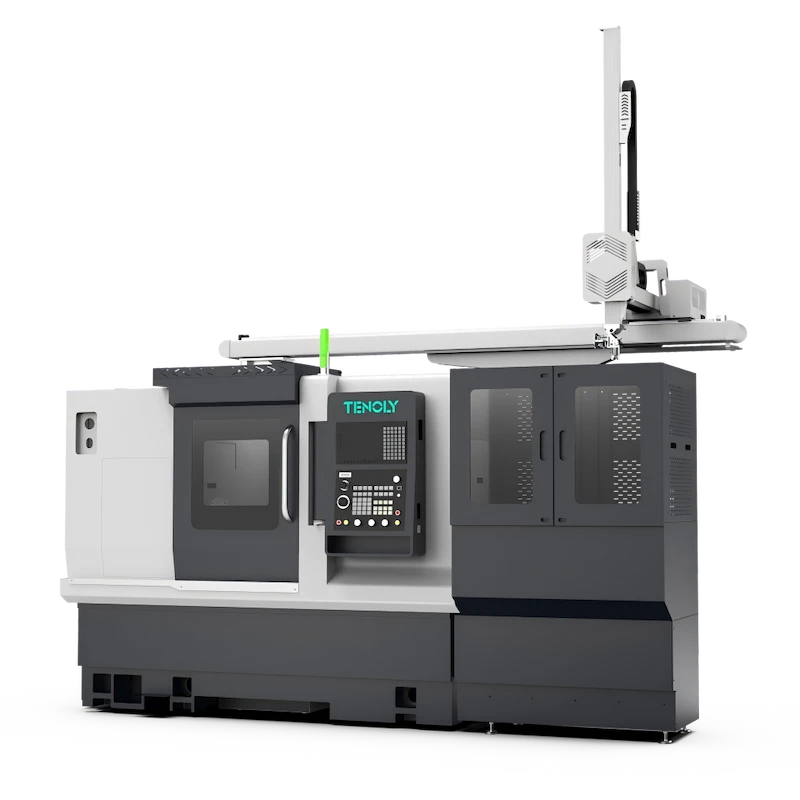
A CNC turning center is an advanced CNC machine tool that primarily performs turning but integrates multiple machining functions. It adds a power turret and a C-axis (and even a Y-axis) to a conventional CNC lathe, along with an automatic tool changer, allowing multiple processes such as turning, milling, drilling, and tapping to be completed on a single machine, achieving “one-time setup, turning and milling combined” machining.
2、Differences from Traditional Lathes and Machining Centers
Compared to traditional lathes, it controls the linkage of each axis through a CNC system, achieving automatic tool feed and automatic tool changing, greatly reducing reliance on the operator’s personal experience and resulting in higher stability.
Unlike conventional machining centers, CNC turning centers primarily operate on rotating workpieces, making them suitable for efficient batch processing of large quantities of shaft and disc-shaped parts. Furthermore, through configurations such as powered turrets, Y-axis, and B-axis, they can achieve mill-turn machining, completing complex parts in a single setup.
3、Common Types (Horizontal/Vertical/Mill-Turn Machining)
Common CNC turning centers can be broadly categorized into three types based on their structure: horizontal, vertical, and mill-turn machining centers. Each type has its own emphasis in terms of structural layout, applicable workpieces, and machining advantages. The table below provides a clear comparison of the key characteristics of the three types, facilitating quick selection based on actual working conditions.
4、Common Types (Horizontal/Vertical/Mill-Turn Machining) Introduction
Common CNC turning centers can be broadly categorized into three types based on their structure: horizontal, vertical, and mill-turn machining. Each type has its own emphasis in terms of structural layout, applicable workpieces, and machining advantages. The table below provides a clear comparison of the key characteristics of the three types, facilitating quick selection based on actual working conditions.
| Type | Features | Applicable | Advantages |
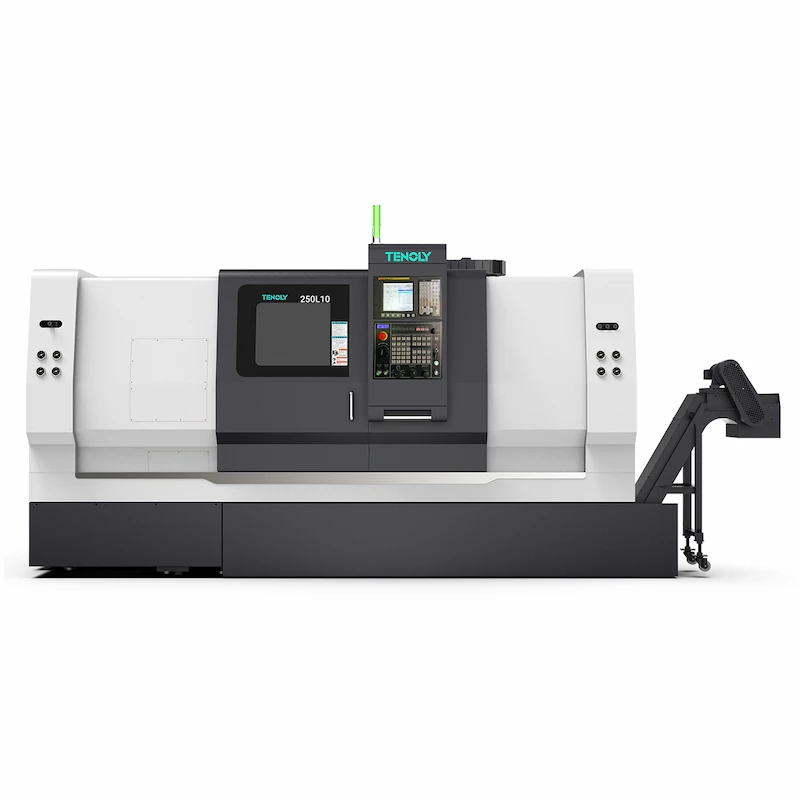
| Horizontal Turning Center | Spindle horizontal, workpiece horizontal clamping. | Batch processing of small and medium-sized shaft and disc parts. | Widely applicable, with mature automation support and high efficiency |
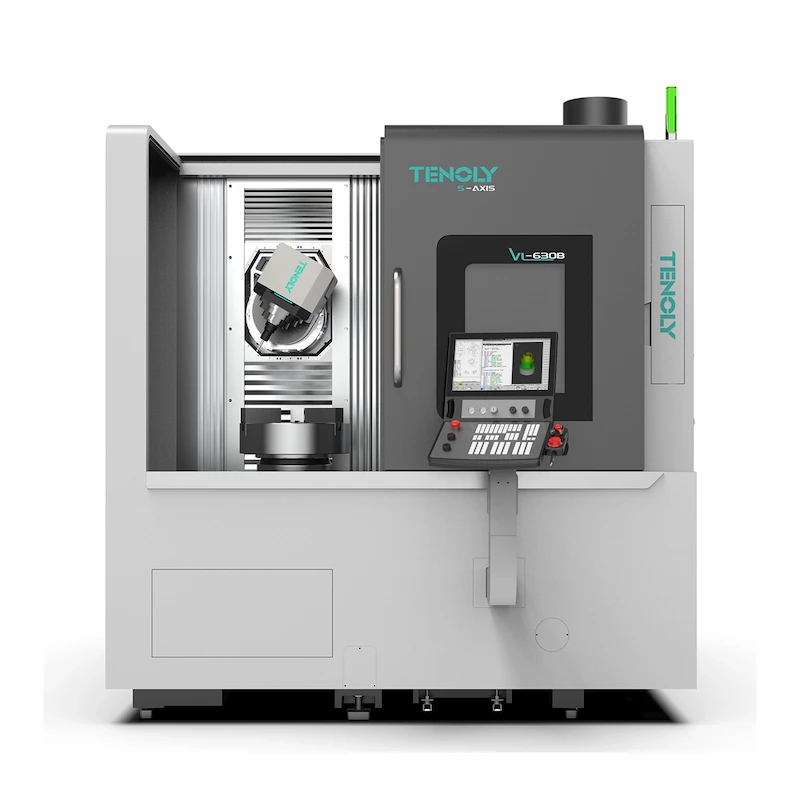
| Vertical Turning Center | Spindle horizontal, workpiece vertical. | Large, heavy parts, such as brake discs and housings. | It offers secure clamping, high rigidity, and better chip removal and cooling. |
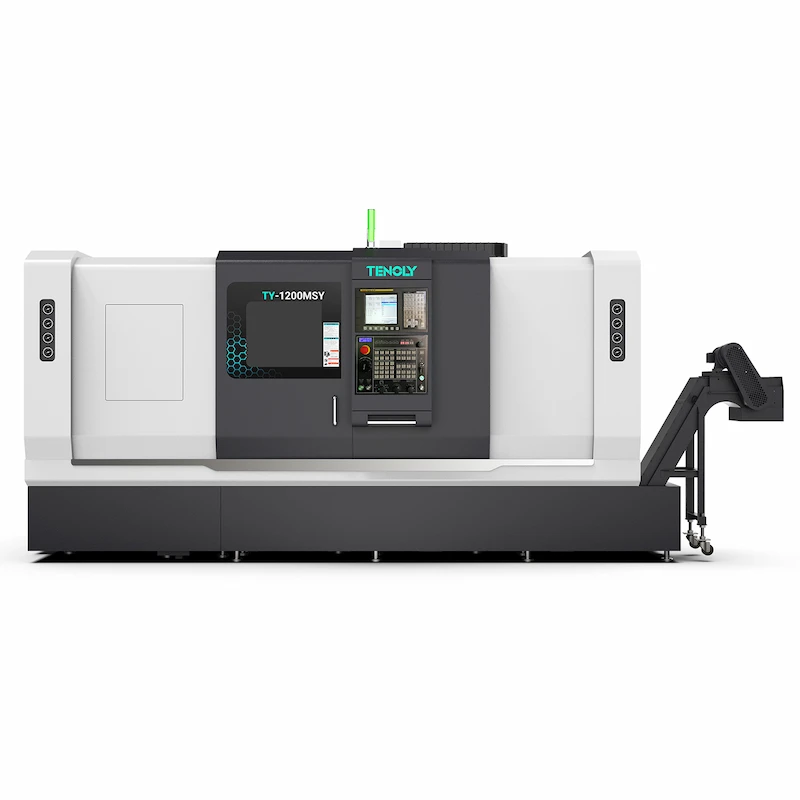
| Milling and Turning Center | Add a power turret and C/Y axis to the turning machining process. | Machining of multi-process parts with complex structures and high precision requirements. | A single-set milling and turning operation that balances precision and efficiency. |
III. Core Performance and Technical Parameters of CNC Turning Centers
When purchasing a CNC turning center, parameters are not just about “good-looking numbers,” but directly related to whether it can stably and consistently produce qualified products.
1、Machining Accuracy, Spindle Speed, Turret Configuration
· Machining accuracy and repeatability: These are the basic indicators that determine part dimensions, coaxiality, and fit clearance, and are also key to whether a company can consistently pass incoming material inspection and third-party testing. Good accuracy not only means less rework but also means you can accept orders with higher requirements.
· Spindle speed and torque: High speed improves machining efficiency and surface finish, but insufficient torque can lead to insufficient torque to handle heavy turning or difficult-to-machine materials. High-precision turning centers typically strike a balance between high speed and high torque, maintaining cycle time while stabilizing heavy turning.
· Turret configuration and number of stations: Turret rigidity, tool change speed, and number of stations determine the number of operations that can be completed in a single setup. More stations, a wider variety of powered tools, higher process integration, and fewer handling and clamping errors.
2、Differences in control systems (e.g., FANUC, Siemens):
· FANUC prioritizes stability, reliability, versatility, and readily available operators and spare parts, making it suitable for turning operations requiring high uptime.
· Siemens emphasizes openness and advanced features, facilitating multi-axis linkage and system integration, making it more suitable for factories with engineering teams and requiring deep customization and automation.
· Domestic systems have also made rapid progress in recent years, offering high cost-effectiveness and short lead times. They are a worthwhile option for companies with limited budgets or those needing rapid production deployment.
3、The Role of Automatic Tool Changer and Intelligent Monitoring
Automatic tool changing shortens cycle time and reduces manual intervention, making it particularly suitable for multi-variety, small-batch production.
The intelligent monitoring system can monitor spindle load, vibration, temperature, and other data in real time, providing early warnings of anomalies, reducing sudden downtime, and keeping the equipment in a relatively “healthy” state over the long term.
Tenoly CNC Turning Center’s Three Core Technologies:
· Unique Turret Design Performance: A unique power turret design with an integrated positive Y-axis/gantry structure provides high rigidity and allows for more workstations (e.g., 12 or 16 stations), suitable for heavy turning and composite machining.

· Heavy-Duty Cast Iron Base and Components: Utilizing an HT300 heavy-duty cast iron bed and large cross-section structure, combined with a four-rail force distribution design, it offers better overall rigidity and vibration resistance, suitable for long-term high-intensity machining.

· High-Speed, High-Precision Spindle Unit: Direct-drive synchronous electric spindle or high-speed spindle assembly achieves higher speeds, better surface finish, and higher indexing accuracy.

· Modular Design Concept Enables a Multifunctional CNC Machine Tool Integrating Turning and Milling.

IV. Key Factors in Selecting a CNC Turning Center
1. First, consider your main products: For batch production, prioritize models with good rigidity, stable cycle time, and easy integration into production lines; for multi-variety or customized orders, models with mill-turn composite capabilities, multiple tool positions, and convenient adjustment are more necessary; for precision parts, prioritize long-term accuracy and thermal stability.
2. Don’t just focus on the purchase price, but consider the entire machine lifecycle: Including the machine body, turning tools, fixtures, maintenance, and downtime losses, equipment that improves yield and reduces cycle time is often more cost-effective than a superficially cheaper machine with more problems.
3. Assuming performance meets your needs, compare the brand’s technological maturity, local service capabilities, and spare parts response speed. Machines with reliable service are more likely to maintain high uptime and a predictable return on investment in the long term.
V. Conclusion
A CNC turning center is a high-performance CNC machine capable of simultaneously performing multiple machining operations such as turning, milling, drilling, and tapping. It features high efficiency, stable precision, and strong adaptability. It helps companies achieve higher productivity and more consistent machining quality within limited space and manpower. Tenoly CNC turning centers are based on a robust structural design, a high-rigidity turret, and a reliable spindle system, emphasizing long-term stability and practical performance, and are committed to providing users with machining equipment that can withstand the test of time.