Skip to content

Choosing between a single spindle lathe and a dual spindle CNC turning center isn’t just about machine specs—it’s about matching your equipment to your annual demand.

As production volume climbs, part handling, secondary operation transfers, cycle overlap, and operator touch time dictate your profit margins just as much as surface footage and turning speed. This guide breaks down how these two architectures differ in the real world, where each shines, and how volume changes your cost equation.
Core Definitions: Single vs. Dual Spindle
Your machine architecture sets the ceiling for your shop floor’s output, labor utilization, and floor space efficiency.
1. The Single Spindle Workhorse
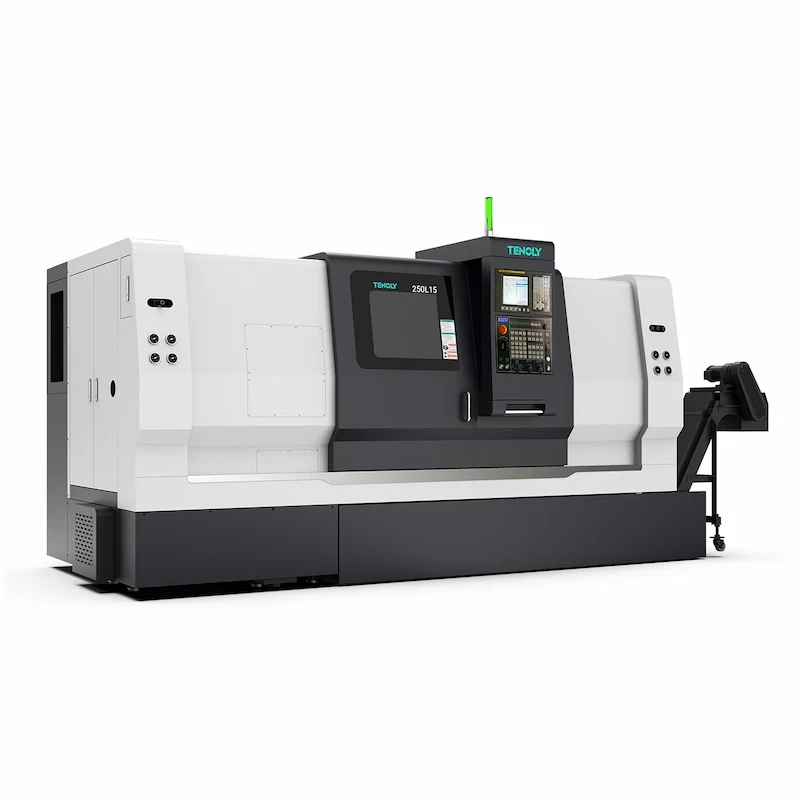
A standard single spindle lathe features one main spindle and a tool turret.
- The Process: You load a raw blank, machine the front (OP10), unload the unfinished part, and manually reload it to machine the back (OP20).
- The Reality: This usually means staging work-in-progress (WIP) bins, moving parts to a second machine, or stopping production for a complete re-fixturing.
- Best Fit: With spindle speeds typically ranging from 3,000 to 6,000 RPM, single spindle machines offer great rigidity and cost-effectiveness. They excel in high-mix, low-volume environments where flexibility trumps automation.
2. The Dual Spindle Powerhouse
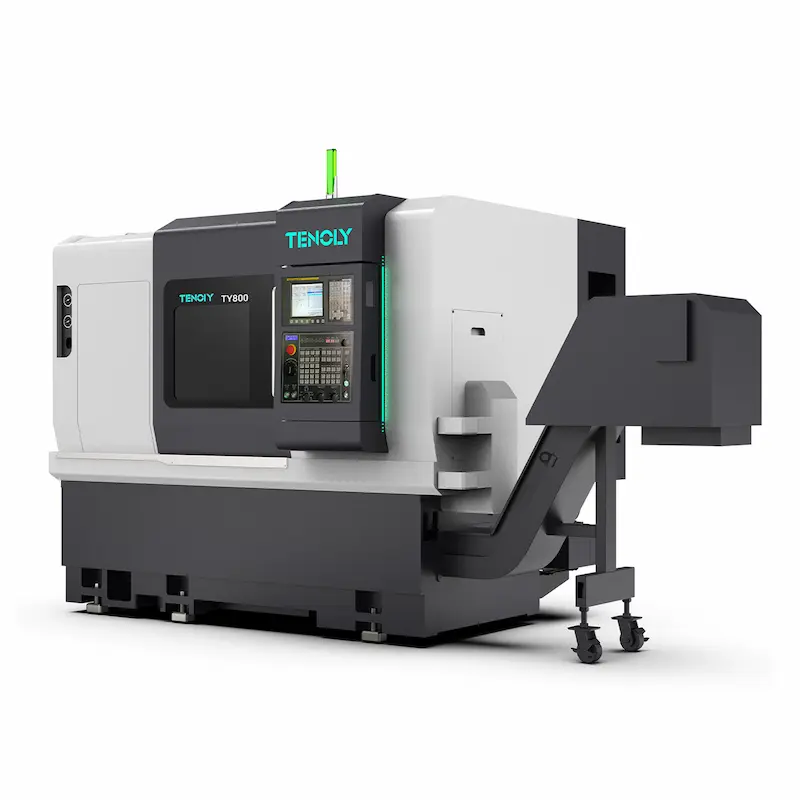
A dual spindle CNC turning center pairs a main spindle with a facing sub-spindle inside the same envelope.
- The Process: Once OP10 finishes on the main spindle, the machine synchronizes speeds. The sub-spindle grabs the part, parts it off, and retracts to machine OP20—all while the main spindle immediately starts OP10 on the next bar of raw stock.
- The Reality: Finished parts drop right into a parts catcher with zero manual flipping. While sub-spindles sometimes sport slightly lower horsepower (e.g., a 15 HP sub paired with a 20 HP main) to handle lighter OP20 cuts, they keep the cutting fluid flowing non-stop.
Operational & Cost Breakdown
Moving from single to dual spindle alters your shop’s economics across three major fronts:
- Throughput & Cycle Time: Dual spindle setups overlap OP10 and OP20, routinely slashing total cycle times by 30% to 45% by eliminating queue delays.
- Labor & Error Rates: One machinist can easily tend multiple dual spindle cells because manual part-flipping is gone. In contrast, manual single spindle transfers not only drive up labor costs but also introduce handling scrap rates of 2% to 3% in high-volume runs.
- Capital vs. OEE: Upfront costs for a dual spindle machine run 40% to 60% higher than a comparable single spindle model. However, machine utilization regularly jumps above 85% (compared to 65%–70% for single spindles), and you save roughly 40% on shop floor footprint.
Quick Comparison Matrix
| Metric | Single Spindle CNC | Dual Spindle CNC Turning Center |
| Initial Investment | Base Cost (1.0x) | 1.4x – 1.6x |
| Floor Space | 100% (Often needs 2 machines) | ~60% (Consolidated footprint) |
| Setup Complexity | Lower per operation | Higher (Requires sync & collision checks) |
| Handling Defect Rate | 2.0% – 3.0% (Manual) | < 0.5% (Automated transfer) |
| Typical Utilization (OEE) | 65% – 70% | 85%+ |
When Does a Dual Spindle Setup Make Financial Sense?
Don’t guess your way into a capital equipment purchase. Use these thresholds to guide your decision:
- Volume Thresholds: If a SKU consistently exceeds 10,000 to 15,000 parts annually, the cycle time savings and labor reduction of a dual spindle setup will quickly offset the higher sticker price. Paired with a bar feeder, they unlock true “lights-out” manufacturing.
- The 60/40 Rule: Map your cycle times. If OP10 takes 3 minutes and OP20 takes 30 seconds, your sub-spindle will sit idle, wasting your investment. Aim for a balanced split, ideally keeping close to a 60/40 ratio between the two spindles.
Frequently Asked Questions
Choose dual spindle when annual volume is high and parts need OP10 and OP20. It cuts handling, boosts throughput, and usually pays back faster on repeat production.
For parts requiring both sides machined, dual spindle setups often reduce total cycle time by about 30% to 45% by overlapping OP10 and OP20.
Yes. Because the machine transfers parts automatically between spindles, one operator can often tend multiple machines with less manual loading, flipping, and staging.
Upfront cost is usually 40% to 60% higher than a comparable single spindle model, but you may recover it through higher utilization, less labor, and fewer handling defects.
Yes. They require spindle synchronization, transfer timing, and tighter collision checks. They are best suited for stable, repeat jobs where the setup effort can be spread over more parts.