Skip to content

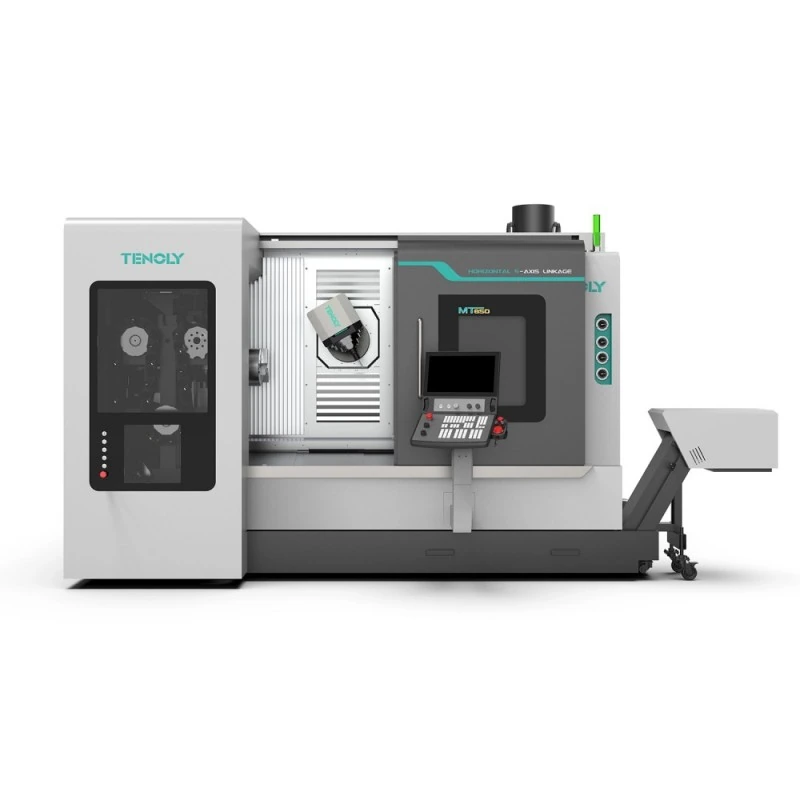
The core advantages of 5-axis mill-turn centers are:
• Integration of turning and milling operations
• Completion of complex machining in a single setup
• Improved accuracy consistency and yield rate
This also means that:
If your parts are not complex, have simple processes, and require few setups, then the advantages of 5-axis mill-turn machining centers are difficult to maximize.
The industries that are truly suitable typically possess one of the following characteristics:
• Complex part structures and numerous processes
• High requirements for accuracy consistency
• Small batches, multiple varieties, and frequent changeovers
• Traditional machining methods involve many setups and high rework rates
Let’s look at a few typical industries.
Aerospace: Complex Structures and High Consistency Requirements
Aerospace is considered one of the most mature industries for 5-axis mill-turn machining center applications, not because it’s “high-end,” but because of the highly compatible part characteristics.
Typical Machining Characteristics in the Industry
• Coexistence of Rotating Bodies and Complex Surfaces
• Multiple Angle Holes, Angled Holes, and Numerous Spatial Features
• Extremely High Requirements for Coaxiality, Positionality, and Repeatability
Value of 5-Axis Milling and Turning Composites
• Completion of Turning, Surface Milling, and Spatial Hole Machining in a Single Setup
• All Key Features Share the Same Reference Point, Reducing Cumulative Errors
• Facilitates Stable Batch Consistency and Reduces Rework Risk
Suitable Applications: Aerospace Structural Components, Engine Parts, High-Precision Rotating Parts
Energy/Oil & Gas Industry: Significant Demand for Multi-Process Integration
In the energy, oil and gas, and heavy equipment sectors, parts are often not “extremely precise,” but the machining process is complex and involves numerous steps.
Typical Machining Characteristics in the Industry
• Large rotating parts
• Multi-step shape + end face + hole system
• Traditional machining relies on multiple machines and multiple transfer steps
Value of 5-axis milling and turning
• Integrates processes originally scattered across lathes and machining centers into one machine
• Reduces intermediate transfers and repeated clamping
• Improves overall machining cycle time and delivery stability
Suitable for: Valve bodies, flange parts, critical structural components of energy equipment
Automotive and Construction Machinery: The Balance Between Efficiency and Stability
In the automotive and construction machinery industries, not all parts require 5-axis milling and turning, but it is very suitable in specific scenarios.
Typical Machining Characteristics in the Industry
• Diverse part types
• High requirements for cycle time and stability
• Some parts require a combination of turning and milling
Which scenarios are more suitable for 5-axis milling and turning?
• Small batches, diverse functional parts or prototypes
• Multi-step shaft parts with high requirements for end face and hole precision
• Parts with many processes but unsuitable for highly automated production lines
Unsuitable for: Very large batches of simple parts with highly standardized processes
Precision Mechanical Components: Number of Clamping Sessions Determines Success or Failure
In the fields of precision machinery, automated equipment, and instrument components, parts may be small in size but are extremely sensitive to precision consistency.
Typical Industry Machining Characteristics
• Compact structure
• Multi-hole, multi-directional machining
• Clamping errors are easily amplified
Value of Five-Axis Milling and Turning Composites
• Multi-directional machining completed in a single clamping session
• Reduced human intervention
• Easier to stably control tolerance chains
Suitable for: High-precision functional parts, composite hole structure parts, customized components
Industry vs. Part: A More Reliable Judgment Logic
From a practical application perspective, “whether the industry is suitable” is less important than “whether the part is suitable.”
You can quickly determine this using the following set of questions:
• Does this part require turning + milling?
• Does multiple clamping sessions lead to unstable precision?
• Does it have multi-angle holes or irregularly shaped structures?
• Does it involve small-batch, multi-variety production with frequent model changes?
If 2-3 of the answers are “yes,” then the 5-axis milling and turning machining center deserves serious evaluation.
From an industry perspective, let’s return to equipment selection.
The industry is just the entry point; the characteristics of the parts are key.
If you wish to systematically understand the structure, capability limits, and selection logic of 5-axis milling and turning machining centers, we recommend returning to the main article for further reading: “A Comprehensive Guide to 5-Axis CNC Turning and Milling Center: One-Stop Solution for Complex Parts.”