Skip to content

When a part requires turning, milling, and drilling, multiple setups and transfers between machines increase production time. How many machining operations can turn-mill technology integrate?
Which Machining Processes Can Turn-Mill Operations Replace?
If your part incorporates both rotational and non-rotational machining features, Turn-Mill technology allows you to consolidate multiple, previously separate machining steps.
First, there are standard turning operations—such as turning outer diameters and bores, facing, grooving, threading, and boring—which typically fall within the capabilities of a standard CNC lathe.
When the machine is equipped with live tooling and a C-axis, you can also perform milling and hole-making operations on the same unit, such as face milling, slot milling, keyway machining, drilling, and tapping.
With the addition of a Y-axis, you can further handle off-center holes, radial holes, and other features located away from the workpiece’s centerline.
Therefore, the real focus shouldn’t be on the sheer number of functions a turn-mill machine offers, but rather on how many steps in your current manufacturing process can be consolidated onto a single machine.
How Many Setups Can a Turn-Mill Reduce?
For many manufacturers, this may be more significant than simply “replacing a few processing steps.”
Consider a part that requires turning, milling, and drilling.
A traditional process might look like this:
CNC lathe → Turning → Cutting/Parting → Re-clamping → CNC milling machine → Milling and drilling
If the part also features side holes or other off-center elements, additional re-clamping steps might be required.
With a suitably configured turn-mill machine, the process flow can be streamlined to:
Single setup → Turning → Milling → Drilling → Side machining
Of course, not every part can be completed in a single setup. However, even reducing the number of setups by one or two minimizes the need for workpiece transfer and re-alignment.
This represents a practical distinction between turn-mill machines and standard CNC lathes.
A practical example: From multiple machining steps to a single turn-mill machine.
Suppose you need to machine a shaft-type component featuring a flange, slots, and holes.
Using conventional equipment, you might first machine the outer diameter, end face, and inner bore on a CNC lathe, then transfer the workpiece to a milling machine to cut slots or flat surfaces on the flange, followed by drilling and tapping. If there are radial holes or eccentric features, additional setups would be required.
It is not just the actual cutting time that consumes resources during this process.
The workpiece must be transported between different machines; each re-clamping requires re-alignment, and operators must manage the transitions between operations. Collectively, this time can represent a significant, yet often overlooked, portion of the production workflow.
If your turn-mill machine is equipped with live tooling, a C-axis, and a Y-axis—and its machining capacity meets the part’s requirements—then multiple operations can be consolidated onto a single machine.
The machining sequence might look like this:
Turning → Slot milling → Drilling → Tapping → Side machining
There is no need for frequent transfers between the lathe and the milling machine.
This shift is particularly impactful for repeat production runs. You eliminate not only the transfer of parts between machines but also the need for repeated setups and the associated non-productive time.
When Is a Turn-Mill Better Suited to Replacing Multiple Machining Processes?
You might want to start by reviewing your machining process.
If a part requires only simple operations—such as turning the outer diameter, facing, and threading—a standard CNC lathe may well suffice; there is no need to opt for a CNC turning and milling machine simply to consolidate processes.
However, the situation changes if the part requires both turning and milling, and incorporates features such as slots, holes, flat surfaces, side features, or eccentric elements.
Components such as shafts, flanges, sleeves, hydraulic parts, and certain valve components often feature both rotational surfaces and areas requiring milling or drilling. For these types of parts, where traditional methods would necessitate repeatedly transferring the workpiece between a CNC lathe and a CNC milling machine, a turn-mill machine can significantly streamline the machining workflow.
This advantage is usually even more pronounced in mass production. Since the same part is machined repeatedly, the cumulative impact of eliminating even a single clamping, handling step, or machine transfer becomes highly significant over the long run.
A Turn-Mill Does Not Mean It Can Replace All Machines
You shouldn’t view a turn-mill machine as a single unit capable of replacing all other CNC equipment.
If your parts primarily require simple turning, the multi-process capabilities of a turn-mill may not offer significant advantages. Likewise, if the part dimensions, materials, or specific machining requirements exceed the machine’s capabilities, you may still need other specialized equipment.
Therefore, when selecting a turn-mill machine, it is best to start by considering the parts and the machining process, rather than simply comparing the number of functions the equipment offers.
What you really need to determine is which operations can be consolidated and how much that consolidation can reduce the need for workholding setups and transfers between machines.
How to Determine How Many Operations Your Turn-Mill Can Replace?
You can start by outlining the complete machining sequence for a typical part, from raw blank to finished product.
For example:
Turning → Grooving → Milling → Drilling → Tapping → Side-hole machining
Next, identify the equipment currently used for each operation. If turning and grooving are performed on a CNC lathe, while milling, drilling, and tapping require moving the part to a CNC milling machine, you can then evaluate whether a Turn-Mill machine could consolidate these operations.
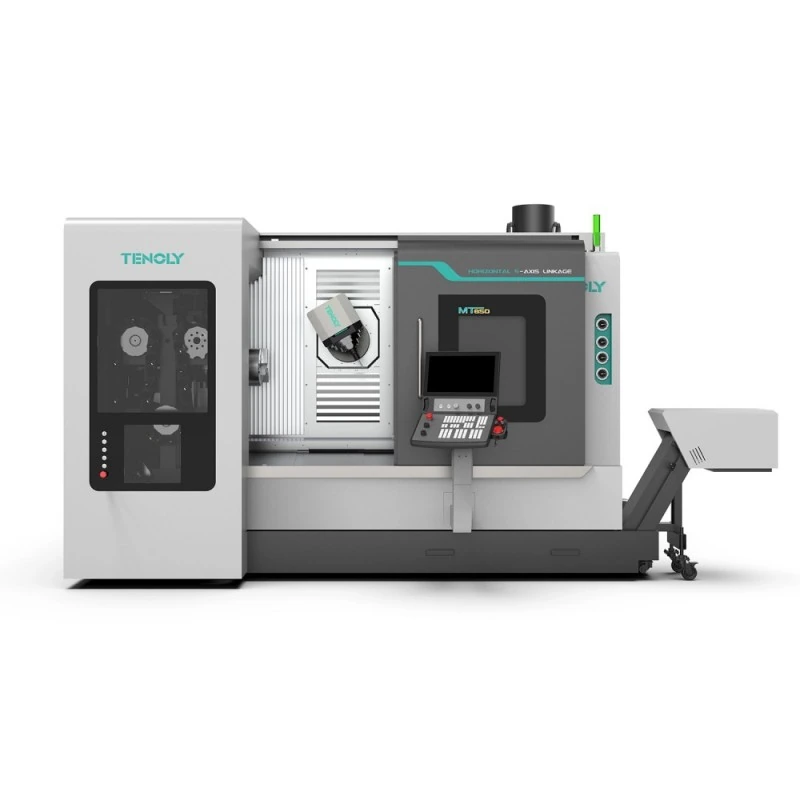
At this stage, focus on key features such as live tooling, C-axis and Y-axis capabilities, sub-spindles, and the specific turret and spindle configuration. Different Turn-Mill configurations offer varying capabilities for integrating machining operations.
Finally, compare the existing machining process with the Turn-Mill process.
Existing process:
Multiple machines → Multiple setups → Multiple transfers
Turn-Mill process:
Single machine → Fewer setups → Fewer transfers
The results derived from this approach are far more meaningful than simply stating that a “Turn-Mill machine can replace several other machines.”
Final Thoughts
There is no fixed number of operations that a turn-mill machine can replace. Its true value lies in reducing the need for multiple setups and part transfers, allowing various machining steps to be completed on a single machine. Select the appropriate turn-mill configuration based on your specific parts and machining requirements to obtain a tailored machining solution.