Skip to content

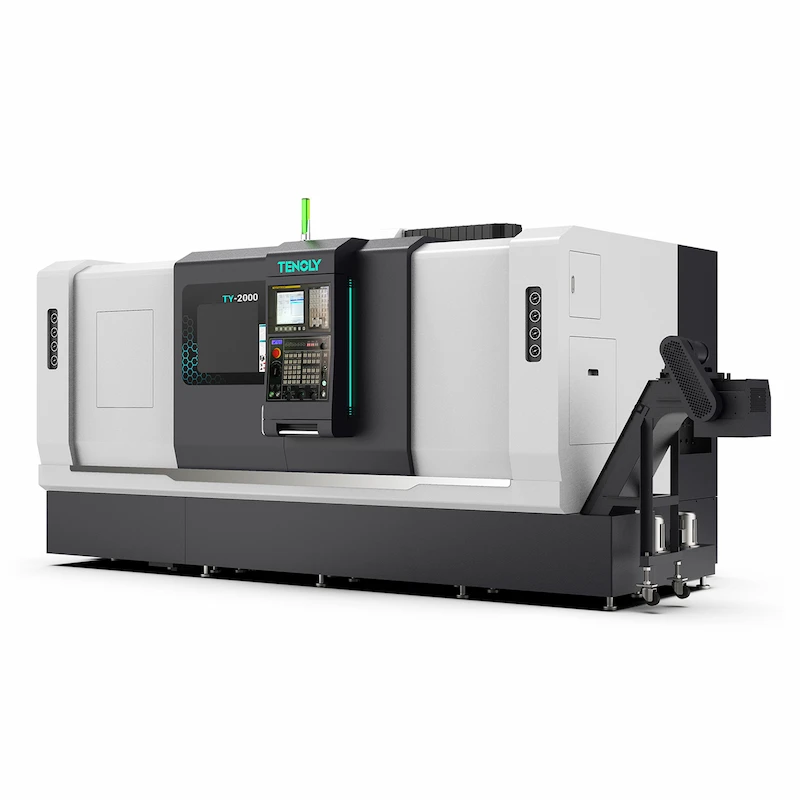
More and more parts require high-precision, high-efficiency, and multi-functional machining. However, traditional lathes or milling machines often can only complete a single operation, requiring multiple clamping operations, which is time-consuming and prone to errors. Facing this challenge, Tenoly’s independently developed high-speed, high-precision direct-drive synchronous electric spindle CNC machine tool boasts high rigidity, high torque, and high efficiency, while also offering superior surface finish and indexing accuracy.
I. Electric Spindle Concept
An electric spindle is a drive unit that integrates a motor directly into the spindle. Compared to traditional spindles driven by belts or gears, electric spindles offer the following advantages:
High Rigidity: Capable of withstanding large turning forces, ensuring machining stability;
High Response Speed: Fast acceleration, with speeds reaching tens of thousands of revolutions per minute, meeting the demands of high-speed turning;
High Precision: Reduces transmission errors and improves machining repeatability and positioning accuracy;
Low Vibration and Low Noise: Improves workpiece surface finish.
An electric spindle can be likened to the “engine” of a turning tool, maintaining precise control during high-speed rotation to achieve efficient machining of complex parts.

II. Definition of an Electric Spindle Milling-Turning Machine Tool
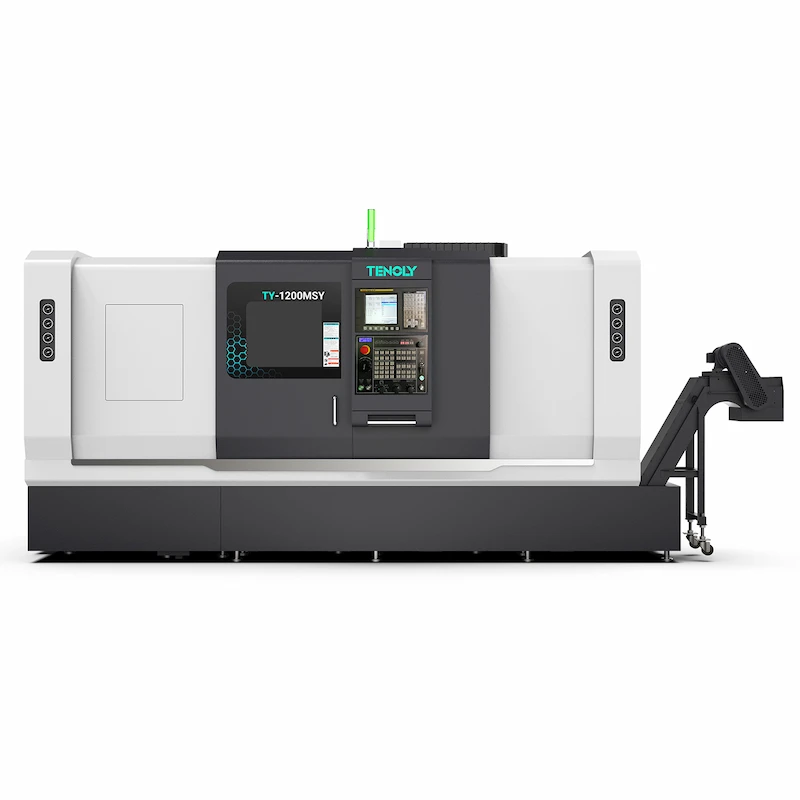
An electric spindle CNC turn mill machine is a device that integrates multiple machining functions such as turning, milling, and drilling onto a single CNC machine tool. Utilizing the high speed, high precision, and high rigidity of the electric spindle, the machine tool can complete multiple machining operations in a single setup, significantly improving production efficiency while ensuring part accuracy and surface quality.
Operating Scenario Description: After the workpiece is fixed on the chuck, the electric spindle rotates at high speed, the turning tool precisely cuts complex curved surfaces along a preset trajectory, and simultaneously the sub-spindle performs turning machining, achieving efficient multi-operation machining in a single setup.
III. Structural Components of an Electric Spindle Milling-Turning Machine Tool
A high-performance electric spindle milling-turning machine tool mainly consists of the following parts, each designed around the core function of the electric spindle:
1. Machine Bed and Base
High-rigidity castings support the entire weight of the machine tool and effectively absorb turning vibrations, providing a fundamental guarantee for machining accuracy.
2. Electric Spindle System
Tenoly employs a direct-drive synchronous design, resulting in faster spindle response, higher precision, and stable tool rotation, providing core power for milling and turning machining.
3. CNC System and Servo Drive
Controls multi-axis simultaneous, enabling complex trajectory planning and synchronized tool movement, ensuring high-precision machining.
4. Feed and Transmission System
Including ball screws and linear guides, ensuring motion accuracy in each axis direction, while coordinating with the electric spindle to achieve high-speed feed.
5. Tool Magazine and Power Tool System
Automatic tool changer and power tool holder support machining with various tools, reducing manual intervention and improving production continuity.
6. Workpiece Clamping and Auxiliary System
Hydraulic chucks or three-jaw chucks ensure workpiece stability, and combined with cooling systems and sensor monitoring, improve machining safety and stability.

IV. Advantages of Electric Spindle CNC Milling and Turning Machines
1. Significantly Improved Machining Efficiency
Multiple machining operations can be completed in a single setup, reducing workpiece handling and re-clamping, and significantly shortening the production cycle.
2. Improved Machining Accuracy and Consistency
Avoids the accumulation of errors from repeated clamping, ensuring stable part accuracy, making it particularly suitable for aerospace and automotive parts machining.
3. High Machining Flexibility
Multi-axis simultaneous and high-speed rotation of the electric spindle make machining complex curved surfaces and multi-feature parts feasible.
4. Reduced Manufacturing Costs
Replaces multiple traditional machines, reducing floor space and manpower investment, resulting in lower long-term operating costs.
5. Energy Saving and Environmental Protection
Integrated multi-functionality reduces redundant equipment use, lowering energy consumption and workshop space requirements.
Summary
The Tenoly electric spindle CNC turning and milling machine not only integrates multiple machining processes such as turning, milling, and drilling, but also achieves high rigidity, high torque, high precision, and high surface finish machining through direct-drive synchronous electric spindle technology, enabling complex parts to be efficiently completed in a single clamping.
Furthermore, the Tenoly electric spindle features simple maintenance, long service life, and energy saving and environmental protection, reducing mechanical wear and downtime, improving production continuity and equipment utilization. In practical applications, this machine tool is widely used in the machining of aerospace parts, automotive engines and transmission components, precision molds, and complex medical device parts, significantly improving machining efficiency, part precision, and consistency, providing a reliable and efficient solution for high-end manufacturing.In the future, with the development of intelligent, multi-axis expansion, and digital manufacturing, Tenoly electric spindle composite machine tools will continue to play a core role in high-precision, high-efficiency, and multi-functional machining, driving the development of modern manufacturing towards high-end intelligence.