Skip to content

When purchasing CNC lathes, many manufacturing companies face a practical question: Should they choose a traditional CNC lathe or upgrade directly to a CNC turning center?
While both fall under the category of CNC lathes, the differences in actual processing capabilities, production efficiency, and automation levels go far beyond simply “adding a few more functions.”
Understanding these differences directly impacts equipment selection, capacity planning, and long-term return on investment.
This article will systematically compare CNC turning center and CNC lathe in practical machining scenarios and provide clear and actionable selection recommendations.

What is a CNC Lathe?
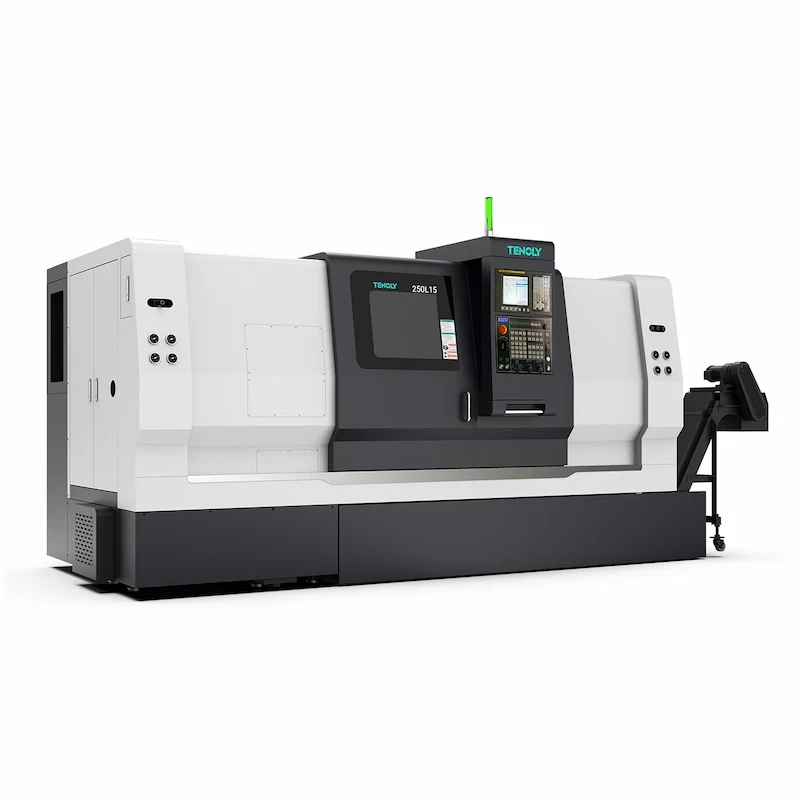
A CNC lathe typically refers to a CNC lathe primarily used for basic turning operations.
During machining, the workpiece rotates driven by the spindle, and the cutting tool feeds along the X and Z axes to complete conventional turning operations such as external turning, facing, grooving, and threading.
In many machining workshops, CNC lathes remain crucial equipment in the production system, particularly suitable for the following situations:
• Relatively simple part structure
• Processes primarily involve turning
• Low automation requirements
• Greater focus on initial equipment investment costs
From a practical application perspective, CNC lathes excel in their mature structure and intuitive operation, making them a stable and reliable basic machining tool.
What is a CNC Turning Center?
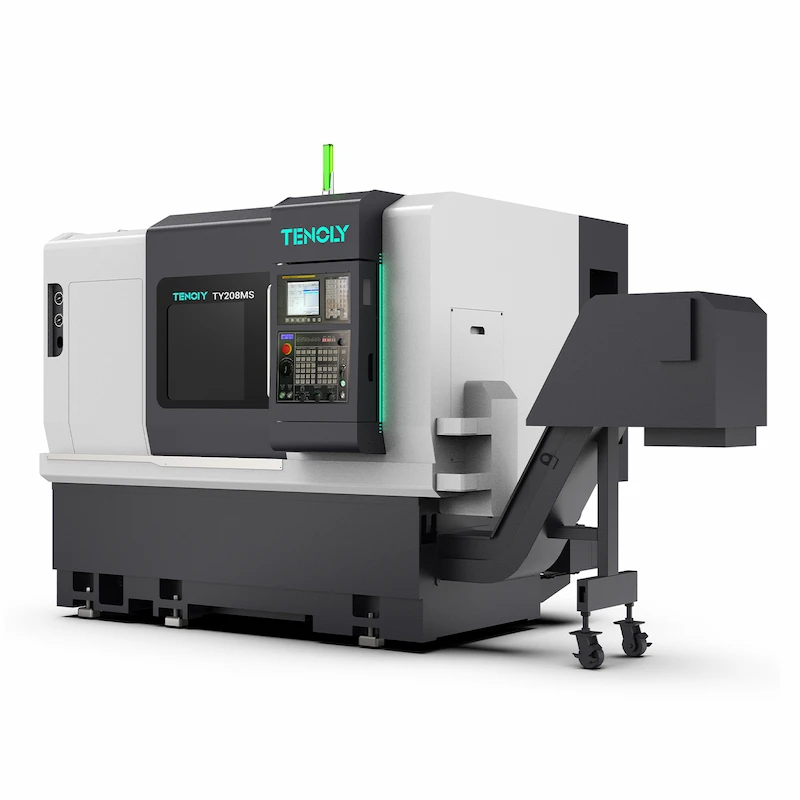
CNC turning centers also belong to the category of CNC lathes, but their design philosophy extends beyond simple turning, moving towards multi-process integrated machining.
Compared to CNC lathes, turning centers typically feature automatic turrets, powered tools, and a wider range of axis configurations (such as C-axis and Y-axis). Some models also incorporate dual spindles or sub-spindles for continuous front and back surface machining.
This structure allows CNC turning centers to complete multiple machining operations in a single setup, significantly reducing workpiece transfer between different machines.
The Core Differences Between CNC Turning Centers and CNC Lathes
In actual selection, many customers are not unfamiliar with the two types of equipment, but rather unclear about how these differences will affect production. The following comparison can help you quickly understand the essential differences between the two.
Comparison of the Main Differences Between CNC Turning Centers and CNC Lathes
| Dimension | CNC Lathe | CNC Turning Center |
| Main Processing Methods | Mainly turning | Turning + drilling + milling and other multiple processes |
| Number of Clamping Operations | Multiple clamping operations are usually required. | Multiple processes can be completed in one time clamping |
| Automation | Relatively low | High efficiency, supports automatic tool change |
| Suitable Part Types | Simple shaft and disc components | Complex structural and multi-feature parts |
| Processing Consistency | Relying on operational experience | More stable, with high batch consistency |
| Typical Applications | Basic processing, cost-sensitive projects | Precision machining and high-efficiency production |
As the table shows, the advantages of CNC turning centers are not only reflected in “more functions,” but also in the optimization of the overall machining process.
For example, completing multiple machining operations on a CNC lathe often means requiring multiple clamping operations. Each clamping operation increases manual operation time and may also introduce cumulative errors.
The value of a CNC turning center lies in completing multiple operations in a single clamping operation, which not only shortens the machining time for a single part but also helps maintain the relative positional accuracy of each machined surface. This is particularly evident in medium to large-volume production.
What are the core advantages of CNC turning centers?
For many companies, choosing a CNC turning center is not about pursuing “more complex equipment,” but about achieving a more efficient and stable production method.
• More suitable for machining complex parts
When parts involve multiple machined surfaces, irregular shapes, or high precision requirements, CNC turning centers can effectively simplify the process route.
• Reduced long-term production costs
Although the initial investment in a CNC turning center is relatively high, its advantages in labor costs, machining cycle time, and rework rate are often evident in medium to long-term production.
• Improve Overall Workshop Production Efficiency
By reducing the number of machines and workflows, CNC turning centers help optimize workshop layout and improve overall production efficiency.
When to Choose a CNC Lathe? When to Choose a CNC Turning Center?
In actual selection, there is no absolute “good” or “bad”; the key is whether it matches the current machining requirements. Please refer to the selection diagram below:
| Processing | CNC Lathe | CNC Turning Center |
| The process is simple, mainly involving turning | √ | – |
| The part has a complex structure and multiple machined surfaces | – | √ |
| Small batches, cost priority | √ | – |
| Medium to large batches, efficiency first | – | √ |
| High requirements for processing consistency | – | √ |
| Plans for future automation upgrades | – | √ |
The significance of this comparison is not to negate CNC lathes, but to help you determine whether your current production model requires more integrated equipment.
Tenoly’s CNC Turning Center Solution Approach
In Tenoly’s CNC lathe design, the CNC turning center is not simply about stacking functions, but rather optimizing around overall machine rigidity, machining stability, and system synergy.
Through a dual-spindle structure, mill-turning capabilities, and a highly stable spindle system, Tenoly’s CNC turning centers better meet the needs of complex parts and high-precision machining, helping customers achieve a balance between efficiency and quality.
Conclusion
The difference between CNC lathes and CNC turning centers essentially lies in their machining methods and production philosophies.
If your machining needs primarily involve basic turning, a CNC lathe remains a reliable and economical choice;
However, as part complexity, precision requirements, and production efficiency continue to increase, CNC turning centers often offer longer-term value.
A clear understanding of the differences between the two is crucial for making the right choice for your equipment investment needs.