Skip to content

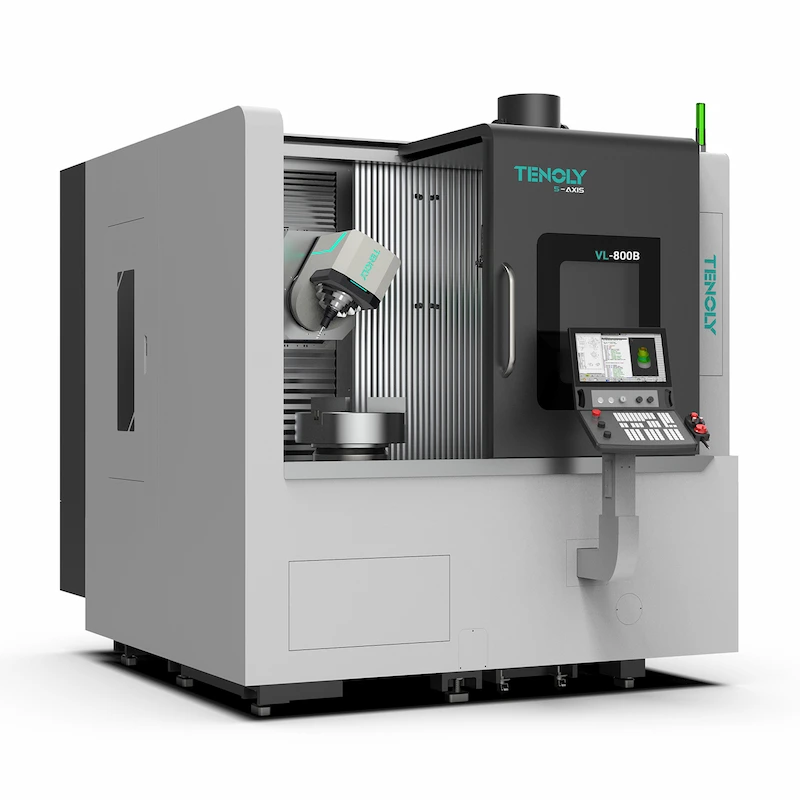
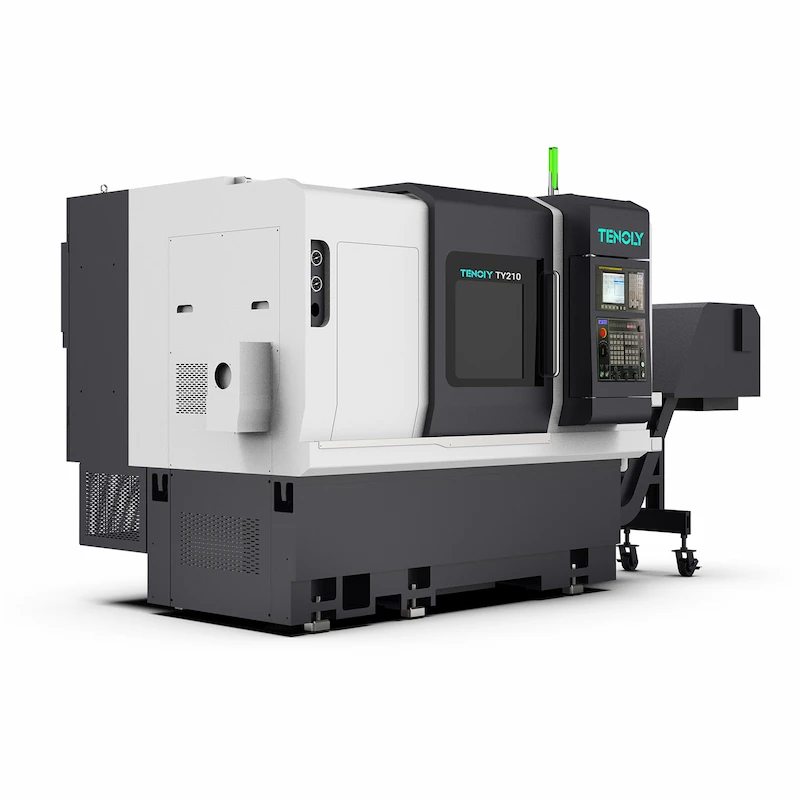
CNC turning centers are high-rigidity CNC machine systems integrating multiple processes and programmable control. They possess high-precision machining, automated tool changing, and flexibility, making them one of the core pieces of equipment in modern precision manufacturing. Their core role is to ensure consistency, high surface quality, and traceability of complex parts under high production capacity through a highly automated and stable machining process, thereby improving the efficiency and quality control level of the entire production line.

I. Working Principle
CNC turning centers use a Computer Numerical Control (CNC) system to precisely control tool path, feed, spindle speed, and fixture positioning. The workpiece rotates on the spindle, and the tool performs turning and machining along the X, Z, and other axes, as well as through multi-axis linkage. Through servo drives and a high-rigidity structure, a highly repeatable and stable positioning machining process can be achieved. A large number of preset programs and tool libraries enable rapid machining from simple to complex geometries, reducing manual intervention and improving production consistency and traceability.
II. Technical Features
• High-rigidity structure and guideway design: Ensures stability and thermal deformation control under turning loads, improving machining accuracy and repeatability under the same conditions.
• Multi-tool magazine and rapid tool change: Enables continuous machining of complex processes, shortens process changeover time, and increases unit output.
• Highly integrated CNC system: Supports multi-axis linkage, complex contour machining, and real-time monitoring, facilitating mass production and flexible manufacturing.
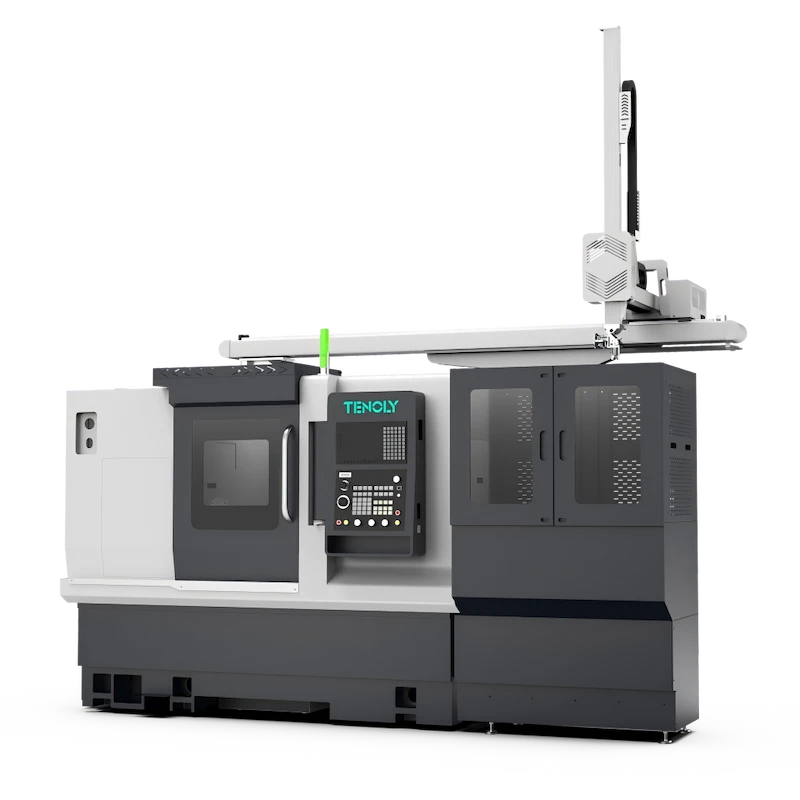
• Automated fixtures and workpiece positioning: Improves clamping repeatability, reduces operator error, and enhances production line flexibility and safety.
• Online monitoring and digital capabilities: Enables process visualization through sensing, measurement, and data acquisition, supporting quality traceability and process optimization.
III. Core Role in Precision Manufacturing
• Improved machining accuracy and surface quality: Stable machine tool rigidity and high-precision spindle coordination enable consistently achieving extremely small geometric tolerances and excellent surface roughness, meeting the requirements of aerospace, medical devices, precision molds, and other fields.
• Increased production efficiency and flexibility: Automated tool changing, rapid process changeover, and multi-process integration significantly shorten production cycles, enabling rapid response to market demands for small-batch, multi-variety production.
• Reduced labor intensity and skill threshold: Through programming-driven and automated control, it reduces reliance on operator skills, improving on-site stability and safety. • Data-driven process controllability: Integrated digital monitoring and diagnostic capabilities make manufacturing process parameters more transparent, facilitating quality management, fault diagnosis, and continuous improvement.
• Promoting smart manufacturing and digital twins: Real-time data from CNC turning centers can be used to build digital twin models, enabling process optimization, predictive maintenance, and production line collaboration.
IV. Typical Application Areas
• Aerospace: Machining of high-precision aerospace components, turbine shafts, guide components, and other parts requiring extremely high geometric accuracy and surface quality.
• Automotive manufacturing and parts: Machining of shafts, gears, connecting rods, and other parts requiring high-stability processes and high-volume batch production lines.
• Molds and precision mechanical parts: Mold parts with complex contours, surfaces, and high tolerance control requirements, such as positioning gears.
• Medical devices and high-precision fields: Small, high-end components requiring strict dimensional control and surface quality to ensure functionality and safety.
V. Selection Considerations
• Tool magazine and tool change speed: Determine the required number, type, and tool change time based on the process route to ensure process stability in continuous machining.
• Spindle Configuration and Speed Range: Select the appropriate spindle power, torque, and speed range for the workpiece material (metal, aluminum, titanium alloy, etc.).
• Guideway Rigidity and Thermal Stability: Prioritize machine tool layouts with high rigidity and good thermal expansion control to ensure consistency during long-term machining.
• Machining Range and Multi-Axis Capability: Assess whether multi-axis linkage is required and whether complex contours or end-face machining are involved, and select appropriate linkage capabilities and control strategies.
• Automation and Digitalization Capabilities: Consider whether the machine possesses online measurement, data acquisition, remote diagnostics, and predictive maintenance capabilities to support smart manufacturing goals.
• Production Costs and Maintenance: Evaluate not only the initial investment but also the impact of tool consumption, maintenance, spare parts supply, and service levels on the total cost of ownership.
The core role of CNC turning machines in precision manufacturing lies in their comprehensive support for high-precision, high-efficiency, and flexible production. Through advanced technological features and multi-industry application capabilities, turning centers have become a crucial cornerstone for achieving high quality, high productivity, and digital transformation.