Skip to content

Many people ask me: Is it really worth spending hundreds of thousands—or even over a million—on a capable domestic CNC turning and milling center? In reality, if the parts involved in the orders you accept are even slightly complex, what you are truly purchasing isn’t just a machine—it’s peace of mind.

Suppose you are currently utilizing a setup consisting of a CNC lathe paired with a CNC machining center. Wouldn’t you have to remove the components that have just been turned on the lathe and then transfer them to the machining center to complete the milling operations? This intermediate step inevitably requires a human operator. Furthermore, this process introduces the critical issue of secondary alignment. While a seasoned veteran machinist might be able to align the part to within a few microns (a “silk”), you cannot reasonably expect every employee to possess that level of experience and patience. If the workpiece is clamped even slightly askew, or if the clamping force is applied just a bit too heavily, the coaxiality of your entire batch of parts could be completely ruined.
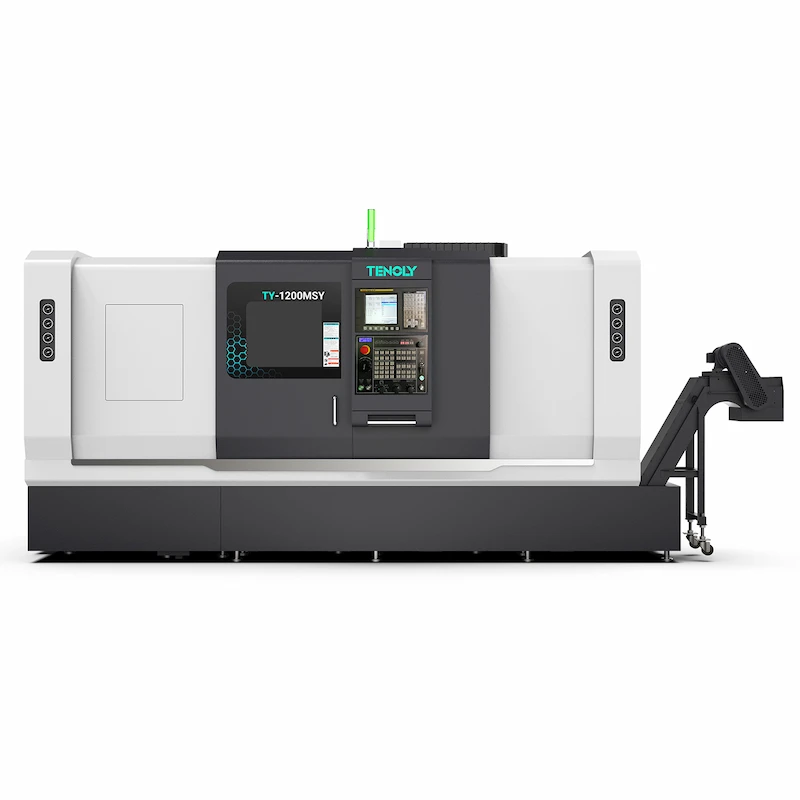
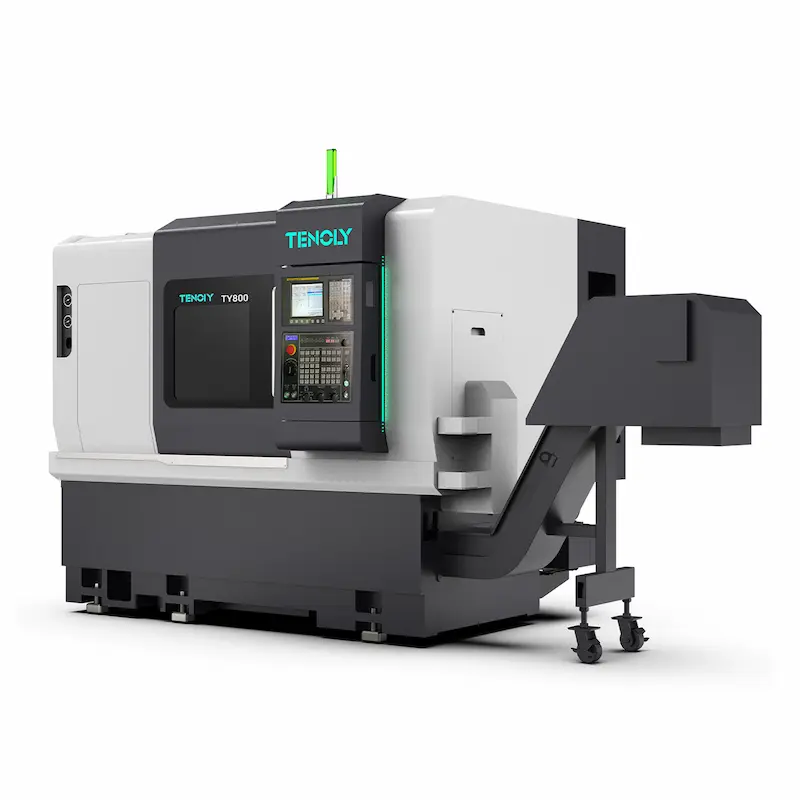
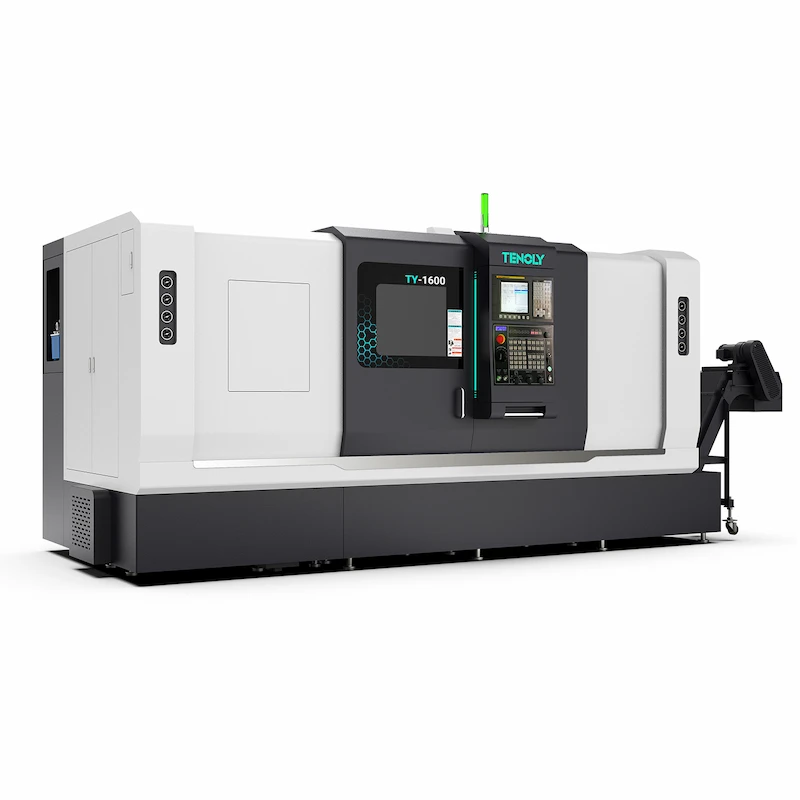
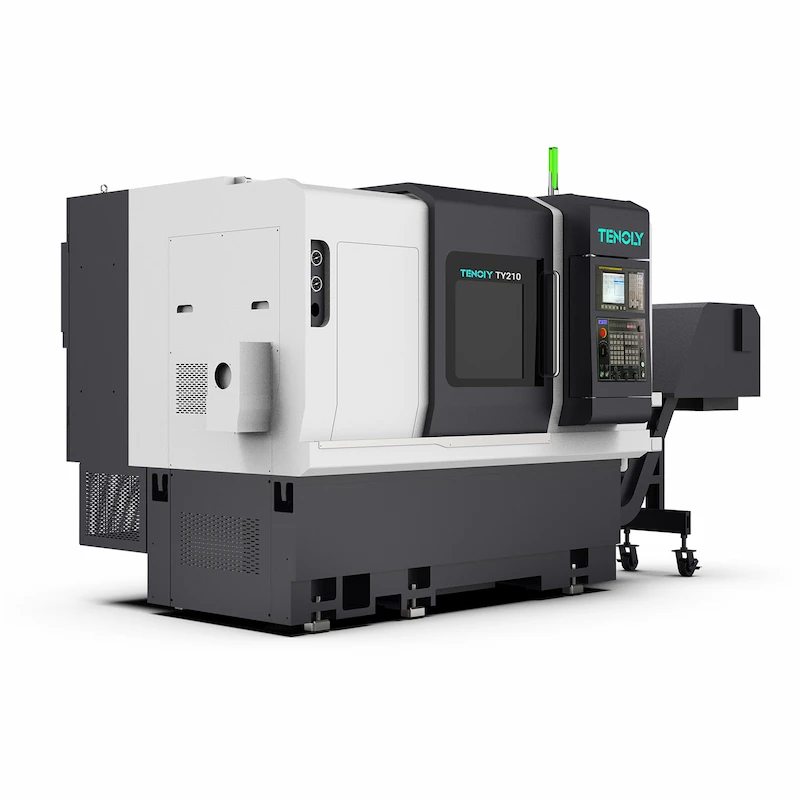
The fundamental logic behind a CNC turn-mill center is to complete multiple processing operations for complex parts in a single clamping setup.
It integrates turning, milling, drilling, tapping, and even grinding capabilities onto a single machine platform. The part is clamped just once, the machining program runs automatically, and precision is maintained at the micron level—thereby eliminating the need for manual handling, repetitive repositioning, and multiple setup adjustments. Moreover, using two separate CNC machines occupies two distinct workstations and may require two dedicated operators; with a CNC turn-mill center, a single operator is sufficient. The space you save can then be utilized to store additional raw materials or to install another piece of automated equipment—isn’t that a direct saving on both labor costs and factory floor space?
Of course, I am not suggesting that you replace every machine currently in your shop with a CNC turn-mill center. There are certain pitfalls you should definitely avoid:
- If you are primarily producing simple shafts—or handling high-volume jobs that involve purely turning operations—I would still recommend purchasing a few slant-bed lathes equipped with automatic bar feeders; that setup offers the fastest return on investment.
- Technical Barrier: Turn-mill centers do indeed place high demands on programming expertise. If your current technical staff is only proficient in simple 2-axis programming, purchasing a turn-mill center would essentially mean using it merely as a standard lathe—which is a complete waste of its advanced capabilities.
FAQ
Given how expensive CNC turn-mill centers are, how long does it typically take to recoup the investment?
Don’t just look at the unit price. If you can reduce your labor force by one person and boost your yield rate by a few percentage points—assuming you have a steady workflow—you can usually recoup the cost difference within 18 to 24 months. Furthermore, it enables you to accept high-value orders that you couldn’t handle before—and that is where the *real* money lies.
I already own a machining center and a CNC lathe; can I achieve the same results simply by retrofitting a “power head” attachment?
If you only need to perform simple drilling operations, that might work. However, if you intend to tackle complex simultaneous-axis machining or heavy-duty turning, a standard lathe simply lacks the structural rigidity to handle it; the power head would vibrate so violently that it would shake your confidence to the core.
My workload consists of 80% turning operations and only 20% milling; is it really worth purchasing this machine?
If that 20% of milling work merely involves drilling angled holes or turning simple keyways, I would advise against investing in an expensive dual-spindle multitasking machine. Instead, purchasing a “slant-bed lathe equipped with a Y-axis” offers the best value for money.
Is the programming particularly difficult? What should we do if our operators aren’t familiar with it?
Modern software is highly mature and user-friendly. For instance, we will configure the post-processor settings for you and provide a full week of training. As long as your operators are proficient with the software interface, they will be able to master the machine very quickly.
Is this machine difficult to repair if it breaks down? Are the after-sales service costs high?
It is certainly more complex than a single-function machine. Therefore, when selecting a brand, “prompt after-sales support” should be your primary criterion. We provide a one-year warranty with our machines.
Does this machine have strict requirements regarding ambient temperature?
Yes, it does. Multi-axis simultaneous machining is highly sensitive to thermal deformation. If your workshop gets as hot and humid as a sauna, we strongly recommend equipping the machine tool with a constant-temperature cooling system; otherwise, the dimensional accuracy of parts produced in the afternoon may differ significantly from those produced in the morning.
Final Recommendation:
A CNC turn-mill multitasking machine not only drastically reduces scrap rates but also significantly shortens production lead times—transforming a job that previously took two days into one that can be delivered in just half a day. For the precision machining of small-to-medium batches of diverse parts, this represents not merely a leap in efficiency, but a dual guarantee of both superior quality and effective cost control. Most importantly, it empowers many small and medium-sized enterprises to genuinely acquire the capability to secure high-barrier orders in sectors such as aerospace, medical technology, and new energy.