Skip to content

In the fields of medical and aerospace manufacturing—sectors that demand the utmost precision—owning a high-performance turn-mill center represents more than just a technological upgrade; it serves as the solid foundation enabling you to secure high-margin orders. Faced with increasingly stringent regulatory compliance and material processing challenges, how can you select the right machine tool to simultaneously reduce costs and boost efficiency? This article delves deep into the industry’s critical pain points to provide you with forward-looking investment advice.

Medical and Aerospace: Why Choose a Turn-Mill Machining Center?
At the pinnacle of the manufacturing industry, products such as medical implants and surgical instruments—as well as aerospace components like turbine blades and precision fasteners—share striking similarities. These include extremely complex geometries, the use of notoriously difficult-to-machine materials (such as titanium alloys and superalloys), and a zero-tolerance policy for errors.
Traditional machining workflows often require parts to be transferred multiple times between lathes, milling machines, and wire-turning equipment. With every additional clamping operation, there is a potential for cumulative positioning errors. The core value of a CNC turn-mill center lies in “process integration,” enabling complex parts to undergo turning, drilling, side milling, and even 5-axis simultaneous machining—all within a single clamping setup. For you, this translates not only into labor savings but, more importantly, into the physical elimination of the error accumulation typically associated with secondary clamping operations.
1. The “Single-Setup” Strategy for Eliminating Clamping Errors
For medical bone screws or small aerospace hydraulic components, precision is often compromised during the transfer between different setups. By utilizing a turn-mill machining center, the entire machining process for a part is completed in a single clamping operation. This not only guarantees superior coaxiality and positional accuracy but, more significantly, compresses the production cycle from weeks down to mere days.
2. The Rigid Performance Required to Tackle “Stubborn” Materials
Titanium alloys and stainless steels are highly prone to generating heat and undergoing work hardening during machining. Specialized turn-mill machining centers possess exceptionally high static rigidity and dynamic stability. When selecting a machine, it is imperative to scrutinize the casting process of the machine bed and the damping characteristics of the guide rails; these factors directly determine whether the resulting parts are qualified products or costly scrap.
Investment Decision Guide: Four Core Dimensions You Must Consider
When you are preparing to purchase a CNC turn-mill center, we advise you not to base your decision solely on the specifications listed in a sales presentation. What truly matters is the machine’s proven profitability and performance within the high-pressure environment of actual production operations.
Dimension 1: B-Axis Flexibility and Simultaneous Machining Accuracy
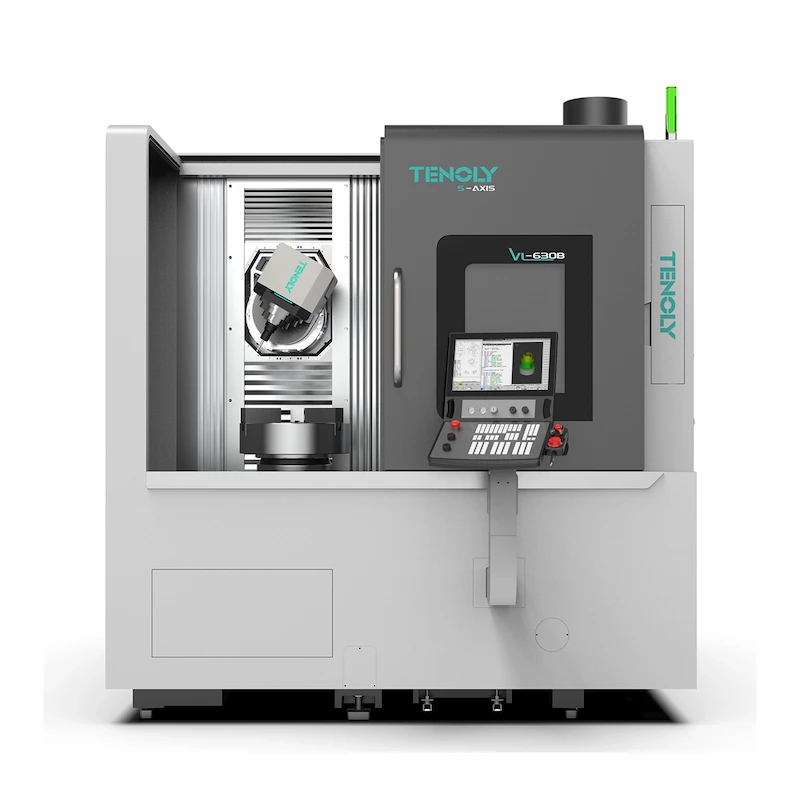
In the aerospace sector, many components feature complex spatial surfaces. The performance of the B-axis (tilting spindle) serves as the critical differentiator between mid-range and high-end machine tools. It is highly recommended that you prioritize a B-axis equipped with high-resolution encoders and robust hydraulic locking mechanisms to ensure precise contouring during simultaneous 5-axis machining operations.
Dimension 2: The Practical Significance of Thermal Compensation Technology
Medical components are typically produced in large batches and demand exceptional consistency. Fluctuations in ambient workshop temperature—as well as the heat generated by the machine tool during prolonged operation—can lead to dimensional drift.
If you discover that the dimensions of a part machined at 3:00 AM differ by several microns from an identical part machined at 3:00 PM the previous day—due to workshop temperature differentials or machine tool thermal expansion—this represents not merely an issue of increased scrap rates, but a full-blown crisis of delivery credibility. Consequently, a superior machine tool should not rely solely on manual compensation by the operator; rather, it must incorporate an intelligent thermally symmetrical structure and real-time thermal compensation algorithms.
Dimension 3: Power Balance Between Spindle and Turret
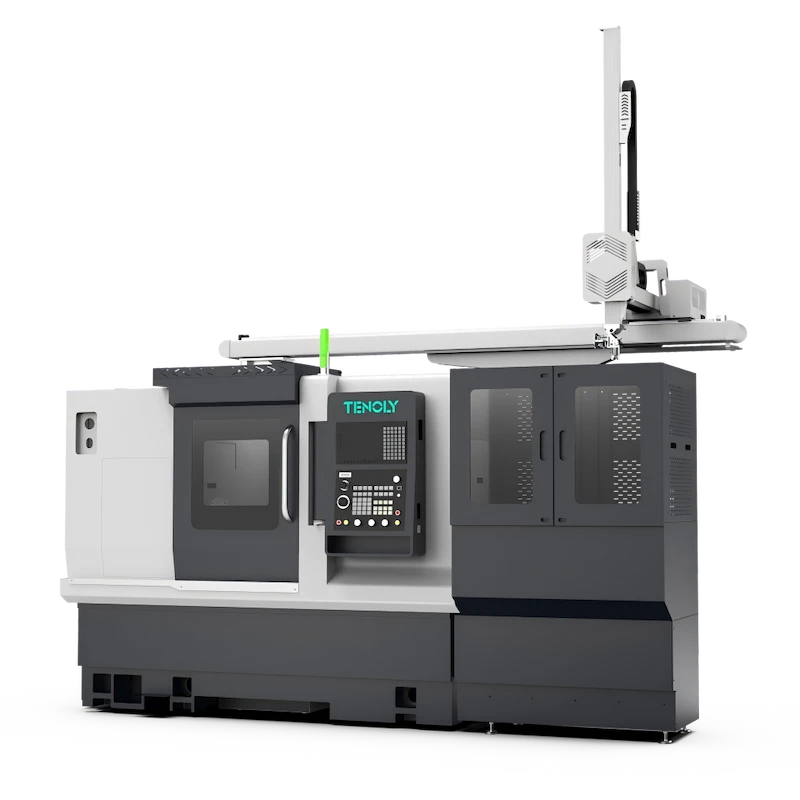
For business models driven by the pursuit of high efficiency, a dual-spindle, dual-turret configuration is virtually the industry standard. This setup enables synchronized, closed-loop machining of both the front and back sides of a workpiece, effectively doubling production efficiency.
However, I would like to offer you a piece of insider advice to help you avoid a common pitfall: Do not be misled by the maximum spindle speed figures touted in marketing brochures; instead, focus your attention on the torque curve of the live turret. When machining the difficult-to-cut materials prevalent in the aerospace industry, high torque output at lower spindle speeds often holds far greater practical value than sheer high speed.
Dimension 4: Software Ecosystem and Digital Twins
Hardware defines the lower limit of performance, while software defines the upper limit. In the machining of complex medical and aerospace components, the risk of machine collisions is exceptionally high. As technological trends shift toward digital transformation, ensuring that a CNC machine tool system supports mature CAM post-processing and high-fidelity machine simulation (Digital Twin) has become a core competitive advantage. By conducting comprehensive software simulations prior to actual turning operations, you can not only preemptively mitigate the risk of costly machine collisions but also effectively safeguard your spindle—a critical asset—thereby ensuring the absolute integrity and reliability of your high-value production processes.
Specific Thresholds in the Medical Industry: Surface Quality and Regulatory Compliance
Medical implants typically impose stringent requirements on surface roughness—often demanding a finish within 0.2 μm—and may even require a mirror-like surface finish.

- Machining Recommendations: A turn-mill machining center must possess exceptional micro-feed capabilities. When selecting equipment, require suppliers to provide actual turning samples—specifically for titanium alloys—to inspect the surface finish under high-speed turning conditions for any signs of chatter marks.
Aerospace’s Extreme Challenges: Thin Walls and High Aspect Ratios
Aerospace structural components frequently feature extensive thin-wall designs, making them highly susceptible to deformation during machining.

- Process Considerations: Consider equipping the machine with a high-pressure through-spindle coolant system (exceeding 70 bar). The purpose of this is not merely for cooling, but—more importantly—to facilitate forced chip evacuation during high-precision deep-hole machining, thereby preventing chips from scratching the finished surface.
A Rational Calculation of Return on Investment
If you are concerned that the cost of a turn-mill machining center is prohibitive or that the payback period is excessively long, allow me to offer an alternative calculation:
- Space Savings: One machine effectively replaces three separate machines.
- Labor Savings: The need for operators to handle parts across multiple sequential processes is significantly reduced.
- Reduced Scrap Rates: When working with high-value materials (such as medical-grade Cobalt-Chrome-Molybdenum alloys), a mere 5% reduction in the annual scrap rate can—in itself—generate enough savings to cover the cost of an entire machine tool.
Conclusion
Choosing a turn-mill machining center is, fundamentally, a choice for a more predictable and reliable mode of production. In the medical and aerospace sectors, precision and efficiency are paramount. Do not be swayed by the mere “stacking” of impressive technical specifications; true value lies in the seamlessness of every tool change, the precision of every compensation adjustment, and the unwavering stability demonstrated after tens of thousands of hours of operation.