Skip to content

In 2026, with the accelerated automation of manufacturing, the most common question enterprise purchasers face when selecting lathes is: continue using traditional lathe, or upgrade to CNC lathe?
This article will provide decision-making references for enterprises from the dimensions of machining accuracy, production efficiency, cost, operator skills, and applicable scenarios.

I. What is a Traditional Lathe?
A traditional lathe, also known as a manual lathe, is a machining equipment controlled manually by an operator. It is suitable for small batches, customized parts, and laboratory teaching, but is greatly affected by the operator’s skill level.
Machining accuracy is affected by operator experience.
Suitable for single-piece or small-batch production. Low maintenance costs and simple structure.
II. What is a CNC Lathe?
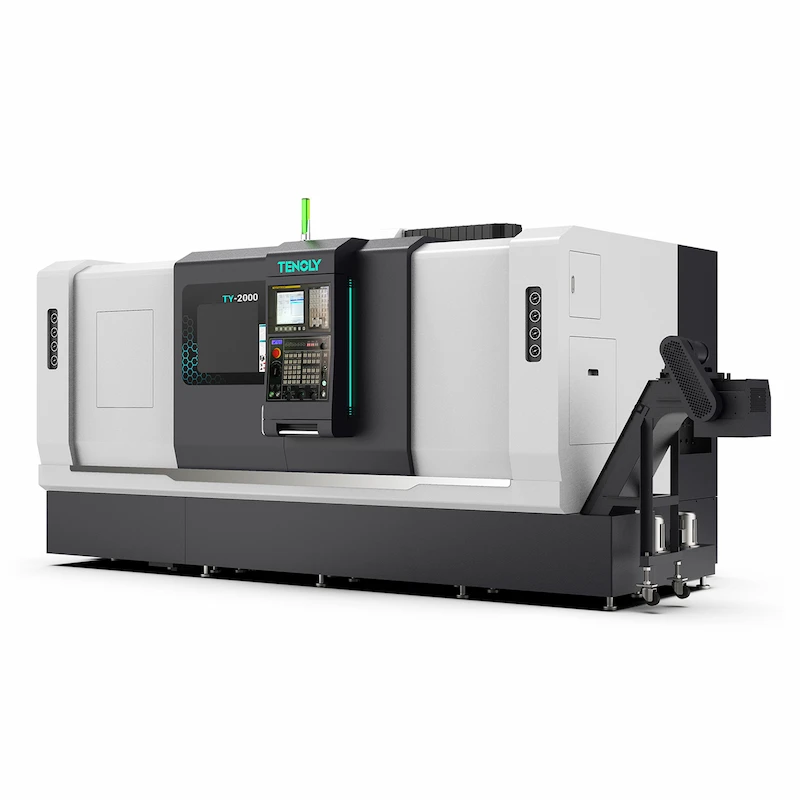
CNC lathes achieve automatic machining through program control (G-code), offering high repeatability and enabling batch production and machining of complex parts. They are core equipment in modern enterprise digital and intelligent workshops.
· High precision and repeatability
· High degree of automation, supporting mass production
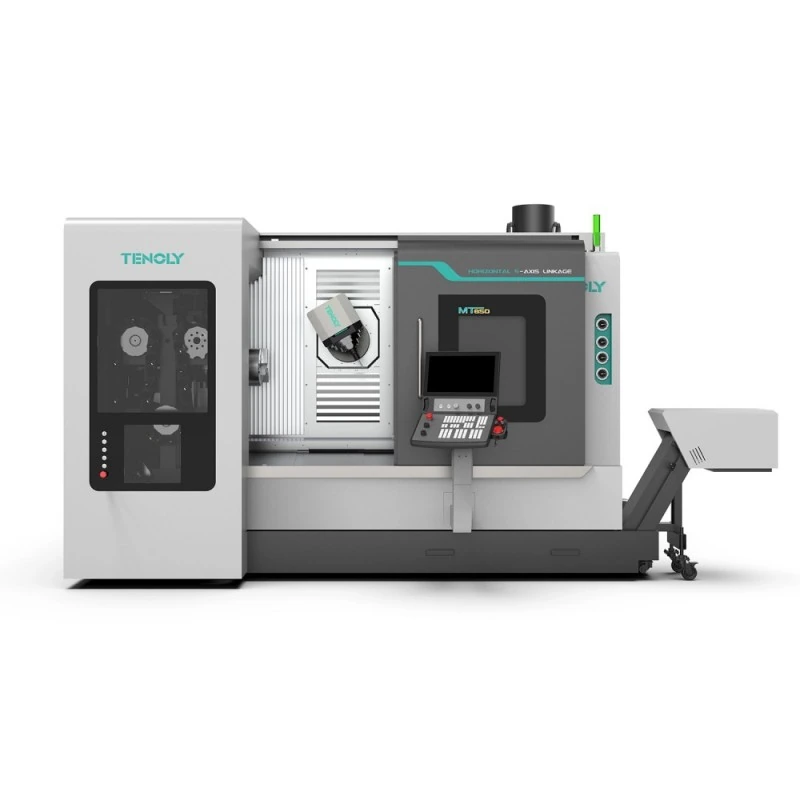
· Integrates milling and turning machining, enabling multi-process setup in a single clamping operation
III. CNC Lathe vs. Manual Lathe Comparison
The following comparison analyzes the differences between CNC lathe and traditional lathe from the core procurement dimensions, helping companies quickly determine the type of equipment suitable for their own factories.
| Dimension | Manual Lathe | CNC Lathe | Procurement Insight |
| Machining Accuracy | highly skill-dependent on operators | repeatable high precision | When high precision is required, CNC lathe has a clear advantage |
| Batch Production Efficiency | Suitable for small batches; low efficiency for mass production | High efficiency in batch processing, enables continuous operation | CNC lathe is the preferred choice for high-capacity enterprises |
| Operational skills | Highly reliant on skilled technicians | Program-controlled operation, low skill dependency | Reduce labor costs |
| Initial Procurement Cost | Low | High | Long-term ROI evaluation is a must |
| Maintenance Cost | Simple, manual maintenance | Requires professional maintenance procedures and systems | Training in-house personnel can cut down long-term maintenance costs |
| Automation & Intelligence | – | Equipped with automatic tool changing, measuring and networking functions | Essential for digital factory upgrades |
| Safety | Dependent on operators’ safety awareness | Comprehensive protective design, minimizes work-related injuries | Adds value to enterprise safety management |
| Application | Small-batch production, custom parts, educational purposes | Mass production, precision components, complex-shaped workpieces | Match production volume requirements before procurement |
| ROI | Relatively low | Relatively high | CNC yields remarkable long-term economic benefits |
As shown in the table above, CNC lathes have significant advantages in precision, batch efficiency, automation, and long-term ROI, while traditional lathes are more suitable for low-volume, low-cost customized processing.
IV. Enterprise Procurement Decision Recommendations
Enterprises should consider the following factors before procurement:
Production scale: CNC is recommended for large-scale production.
Precision requirements: CNC is preferred for high-precision parts.
Personnel costs and skill reserves: CNC can reduce reliance on skilled workers.
Long-term ROI: Higher initial investment, but better ROI.
V. Enterprise Procurement Trends in 2026
With the acceleration of intelligent manufacturing and automation, more and more enterprises are choosing CNC lathes to achieve unmanned workshops and digital management. At the same time, the trend of mill-turn machining and multi-axis machining is obvious, making CNC investment even more worthwhile.
VI. Common Procurement Misconceptions
Misconception 1: CNC lathes are always more expensive than traditional lathes → Long-term ROI is key.
Misconception 2: CNC lathes are not suitable for small businesses → Flexible programming is possible even with small-batch customization.
Misconception 3: Traditional lathes will be phased out → Still suitable for low-volume production, maintenance, and training.
VII. Summary
There is no absolute good or bad, only whether it matches the actual needs of the enterprise. Choosing a CNC lathe is not just an equipment upgrade, but a comprehensive improvement in production capacity, personnel costs, and factory automation level.
Next Step Recommendation: Based on your own production volume, product type, and budget, refer to “2026 Complete Guide to Enterprise Procurement of CNC Metal Lathes” to select the most suitable model and configuration.