Skip to content

In modern manufacturing, part designs are becoming increasingly complex, and machining accuracy requirements are rising, often proving insufficient for traditional lathes or machining centers. This article provides a comprehensive analysis of the concept, advantages, industry applications, and selection guidelines for 5-axis milling-turning machining centers, helping CNC machine tool dealers, purchasers, and machining plants quickly determine if equipment upgrades are needed and obtain technical support.
By reading this article, you will gain:
A comprehensive understanding of 5-axis milling-turning machining centers;
Understanding the machining challenges they can solve and their differences from traditional equipment;
Part compatibility, industry applications, and key selection considerations;
Free process assessment and technical consultation.
What is a 5-axis Milling-Turning Machining Center?
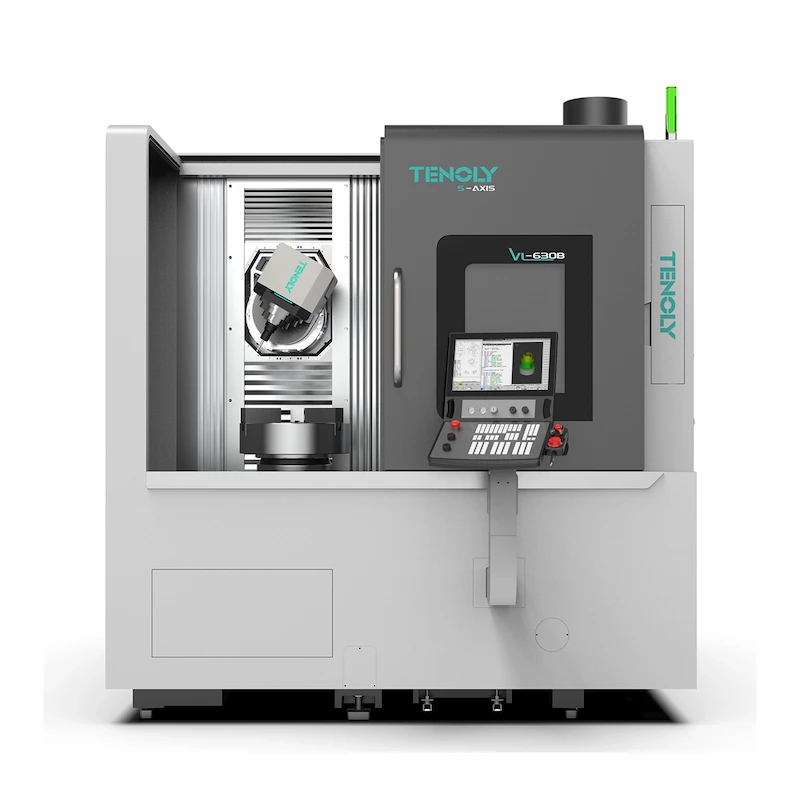
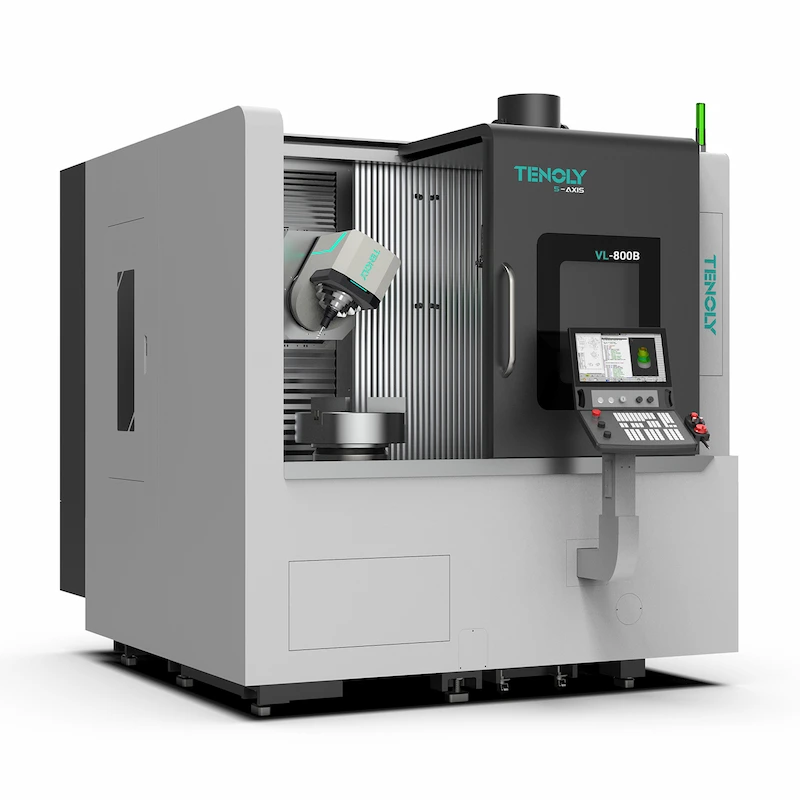
A 5-axis milling-turning machining center is a high-end CNC machine that integrates turning, milling, and five-axis simultaneous machining. Unlike traditional lathes, it can complete multi-face machining of a part in a single setup, significantly reducing the number of processes and setups, and improving accuracy and production efficiency.

Core Advantages Overview
· Completes multi-face machining in a single setup, reducing cumulative errors;
· Improves machining accuracy and surface quality, adapting to high-precision parts;
· Supports machining complex curved surfaces and features such as spiral grooves and oblique holes;
· Enhances automation and flexible production capabilities.

What Machining Challenges Can a 5-axis Milling-Turning Center Solve?
Modern part designs are complex and varied. Relying solely on traditional equipment often results in problems such as difficulty in guaranteeing accuracy, cumbersome processes, and long production cycles. The 5-axis machining center effectively solves these pain points.
Complex Curved Surfaces and Multi-Process Parts
· Aerospace parts: such as blades, airframe structural components;
· Medical device parts: such as high-precision implants;
· Mold parts: complex curved surfaces, many deep cavities.
Reduced Processes and Clamping Times
Traditional machining requires multiple clamping and transfer operations, leading to positioning errors and a decrease in cumulative accuracy. 5-axis composite centers complete multi-face machining in one operation, significantly reducing errors and machining time.
Improved Accuracy and Surface Quality
· Controllable coaxiality and contour errors;
· Supports high-precision toolpath planning, achieving improved surface finish.
Differences between 5-Axis Milling and Turning Center and Traditional Lathe/Machining Center
Understanding these differences helps in assessing the value of the investment.
Machining Capacity Comparison
| Feature / Indicator | Conventional Lathe | Machining Center | 5-Axis Turn-Mill Center |
| Setup Times | Multiple | Multiple | Single setup |
| Machinable Surfaces | 1–2 faces | Multiple | Full multi-face |
| Precision | Medium | High | Ultra-high |
| Machining Efficiency | Medium | High | High and stable |
Flexibility and Automation
5-axis CNC turning and milling center can adapt to small-batch, multi-variety production, supporting automated loading and unloading and tool compensation, while traditional equipment has limited flexibility.
Return on Investment and Efficiency
Although the initial investment in a five-axis machining center is high, its ROI is generally better than a combination of multiple traditional machines by shortening the processing cycle and reducing labor costs.
Typical Machinable Part Types and Complex Features
Part Type Examples
· Aerospace: Blades, turbine disks, structural components
· Automotive parts: Engine parts, precision molds
· Medical devices: Implants, surgical instruments
· Molds: Injection molds, high-precision stamping molds
Key Complex Features
· Curved surfaces, oblique holes, deep cavities, spiral grooves
· Multi-process machining in a single setup
· High-precision coaxiality and surface quality requirements
Core Structure and Key Configuration Analysis
Spindle, Tool Magazine, and Turret Structure
· 5-axis simultaneous spindle + powered turret
· Automatic tool changer and multi-tool position support for complex machining
Guide Rail and Body Rigidity
· High-rigidity body reduces machining vibration
· Linear guide rails and ball screws ensure high precision
Automation and Measurement Systems
· Automatic tool length measurement and compensation
· Loading and unloading robots enable unattended production
Applications of 5-Axis Milling and Turning Composite Center in Different Industries
· Aerospace: High-precision complex parts completed in a single setup, reducing errors
· Automotive parts: Engine parts, precision mold machining
· Medical Devices & Molds: High-precision medical device parts, injection mold processing

Automation and Flexible Production Capabilities
Automatic loading/unloading and inspection system
Trigger measurement → Automatic compensation → Automated processing
Flexible production and multi-variety switching
Quick process switching for small-batch, multi-variety production
Data-driven management
· Integration with MES and CAM systems for production traceability
· Facilitating production monitoring and quality control
How to Choose a Suitable 5-Axis Milling and Turning Center for Your Factory
Selection based on part complexity and batch size
· Providing a selection checklist: part dimensions, precision, number of operations
Budget and ROI Considerations
· Investment payback period estimation
· Comparison of cost and efficiency with traditional equipment combinations
Technical Consultation and After-Sales Service
· Submit part drawings → Receive free processing solutions and process assessments
Process assessment and technical consultation suggestions