Skip to content

When choosing a CNC lathe, more axes don’t necessarily mean better value. What really matters is the type of parts you are producing, the required precision, the frequency of job changeovers, and whether your team can actually utilize the equipment’s full capabilities.

If you are simply producing basic shaft-like parts, opting for a multi-axis mill-turn machine often only increases capital expenditure while increasing the complexity of programming, maintenance, and setup. Conversely, if a part requires features like radial holes, flat surfaces, or keyways, forcing the job onto a 2-axis machine—necessitating repeated re-clamping—will cause efficiency and consistency to plummet.
What Are 2-Axis, 3-Axis, And Multi-Axis Lathes?
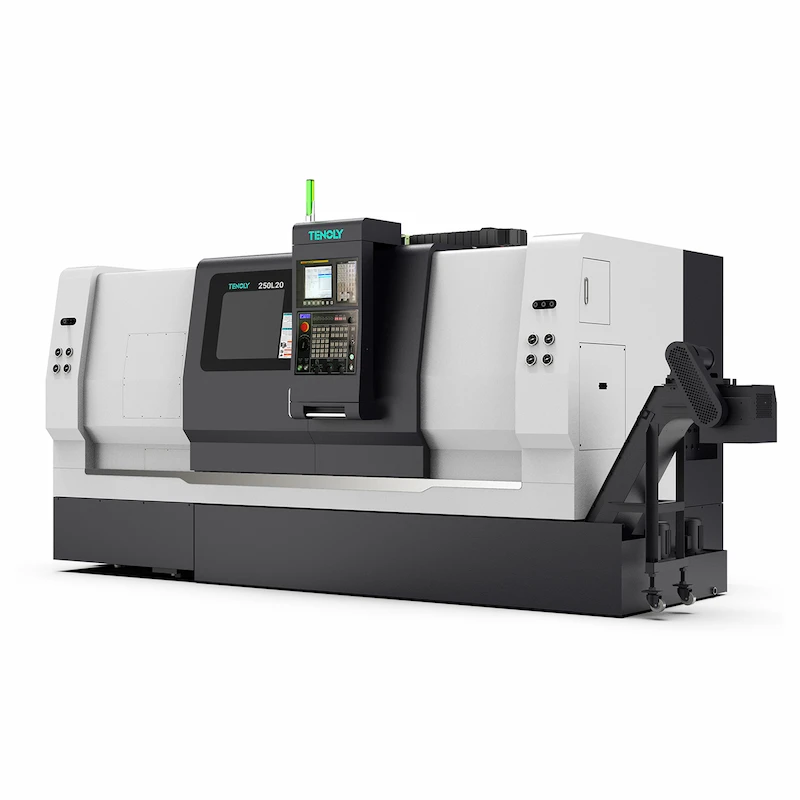
- 2-axis lathe essentially operates on the X and Z axes, making it suitable for standard processes like turning, facing, grooving, and threading. Its advantages are straightforward: simple structure, high rigidity, quick setup, easy maintenance, and simpler troubleshooting when issues arise.
- 3-axis turning center typically adds a C-axis and live tooling to the 2-axis configuration, enabling basic milling, drilling, and tapping. For many parts of moderate complexity, this capability is sufficient to eliminate the need for certain secondary operations.
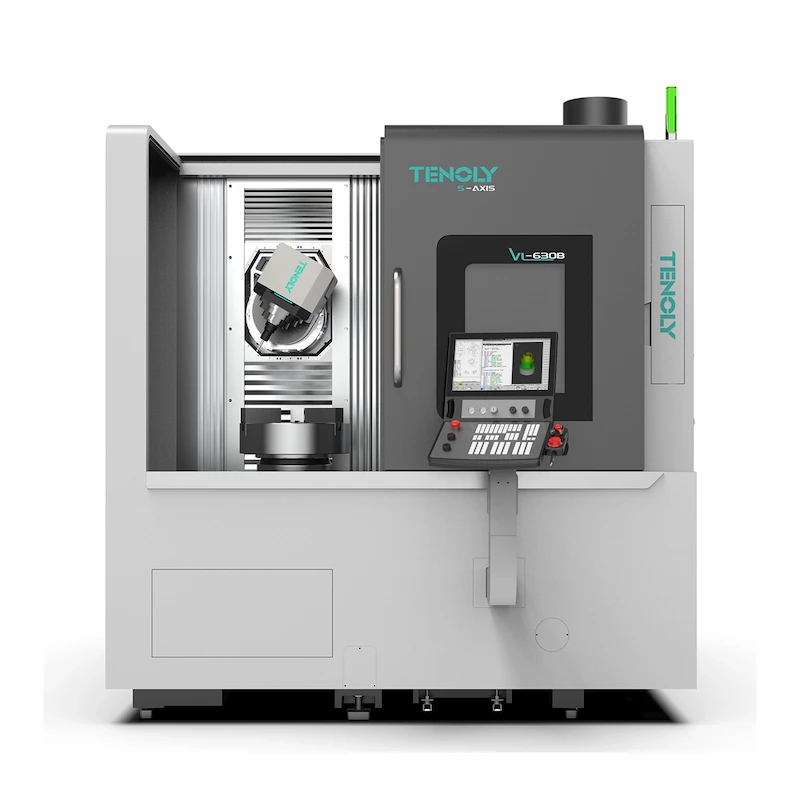
- Multi-axis mill-turn machines take this a step further, commonly featuring configurations such as a Y-axis, a sub-spindle, or a B-axis milling head. Their value lies not in “showing off” technical capabilities, but in the ability to complete the part—from raw blank to finished product—on a single machine.
What Are The Practical Differences?
From a shop-floor perspective, 2-axis machines are best suited for stable, high-volume production of standard parts. For components dominated by rotational surfaces—such as shafts, sleeves, and flanges—these machines offer stable operation and allow for optimized cycle times.
3-axis machines are ideal for parts that are “somewhat complex, yet not complex enough to require a full mill-turn center.” Examples include parts with hole patterns on the face, radial holes on the outer diameter, or localized flat features; in these cases, eliminating a process transfer often reduces the risk of human error.
Multi-axis machines are better suited for high-mix, low-volume production involving complex geometries that require completion in a single setup. For sectors like medical devices, aerospace, and precision fluid components, the focus isn’t just on machining time; it’s about minimizing setups, reducing material handling, and reducing scrap rates.
Don’t Just Look At The Machine’s Price Tag.
Many buyers focus solely on the cost of the standalone machine, but the real expense lies in the supporting ecosystem. As the number of axes increases, so do the costs associated with CAM programming, post-processing, tooling systems, workholding, first-article inspection, and ongoing maintenance.
The advantage of a 2-axis machine is cost predictability. Tooling is relatively simple, the process flow is straightforward, and operator training is much faster.
The issue with multi-axis machines isn’t just the high price—it’s the “comprehensive cost” involved. You need more than just the machine; you need skilled programmers, reliable post-processors, robust simulation capabilities, and a management style that can handle the higher costs associated with trial and error.
What Is The Most Practical Choice?
If your current orders consist mainly of standard shaft-like parts produced in large batches with simple geometries, prioritize a 2-axis CNC machine. It usually offers the best cost-performance ratio and aligns best with traditional turning logic.
If your parts feature cross-holes, flat surfaces, or simple eccentric features—but aren’t complex enough to require flipping the part over—a 3-axis machine is often the most balanced choice. Many factories get stuck at this stage, not because they lack the right equipment, but because their process workflows aren’t yet optimized.
Multi-axis machines truly make sense when your orders involve high-value, low-volume, and complex features, and when your customers prioritize delivery speed and consistency. These machines aren’t merely “upgraded lathes”; they represent a fundamentally different approach to production organization.
Check These Points Before The Machine Arrives:
- Ensure your CAM software and post-processors are already validated; don’t wait until the machine arrives to start configuring them.
- Confirm that the workshop’s temperature control, foundation rigidity, power supply, and air supply can support stable machine operation.
- Account separately for the budget for accessories such as turning tools, live tool holders, and sub-spindle workholding.
- Check if there is someone on-site capable of genuine multi-axis programming, rather than just modifying parameters based on templates.
- Clarify your objective: are you buying this machine to eliminate process steps, or simply to appear more technologically advanced?
FAQ
Choose a 2-axis lathe for high-volume simple cylindrical parts such as shafts, bushings, spacers, and fasteners. It offers fast cycles, low tooling cost, and easy setup.
A 3-axis lathe typically adds C-axis spindle indexing, enabling live-tool operations such as cross-holes, flats, keyways, drilling, milling, and tapping without moving the part to another machine.
Invest in multi-axis machining when parts need off-center, angled, or back-side features and secondary operations are slowing throughput or causing tolerance stack-up.
No. Extra axes help complex parts, but add programming, tooling, maintenance, and setup complexity. For simple turned parts, a 2-axis lathe may produce faster and cheaper.
Compare purchase price, tooling, workholding, CAM software, operator skill, setup time, maintenance, and expected part volume. Use the total cost of ownership, not the machine price alone.
Final Thoughts
If your parts don’t require that many degrees of freedom, don’t pay for capabilities you won’t use. The best equipment isn’t necessarily the one with the most impressive specifications on paper; it’s the one that best aligns with your current order mix and your team’s capabilities.