Skip to content

Purchasing a CNC lathe is a major investment; selecting the right equipment is essential to ensuring high returns. Before making a payment, be sure to ask these 10 key questions to make a wise, risk-free decision.

1. Is The Bed Structure And Rigidity Up To The Mark?
The foundation of all high-precision turning lies in the machine bed. If the casting is substandard or the structural design is flawed, the machine cannot suppress vibrations during heavy turning. This leads to chatter marks on the workpiece, poor surface finish, and even premature tool failure.
You should ask: Does the bed feature a high-rigidity slant-bed design (such as a 30-degree or 45-degree heavy-duty Meehanite cast iron structure)? After casting, did it undergo stress-relief annealing and rigorous thermal stability treatment?
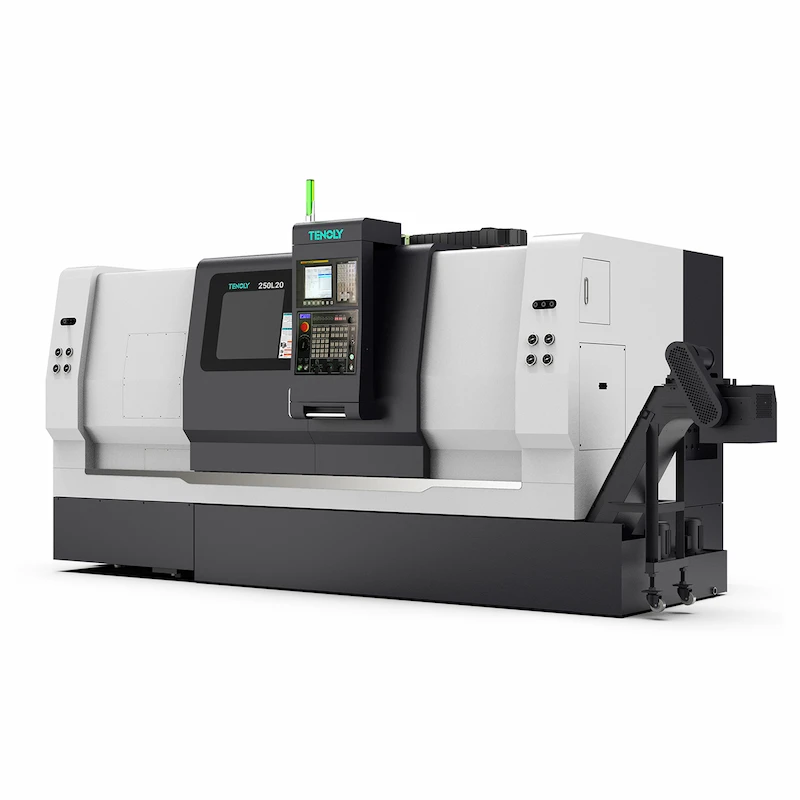
Every Tenoly CNC machine features an optimized design based on Finite Element Analysis (FEA), ensuring exceptional rigidity and smooth chip evacuation paths, preventing thermal deformation even during heavy-duty turning.
2. Do The Spindle Performance And Multi-Tasking Capabilities Meet Your Needs?
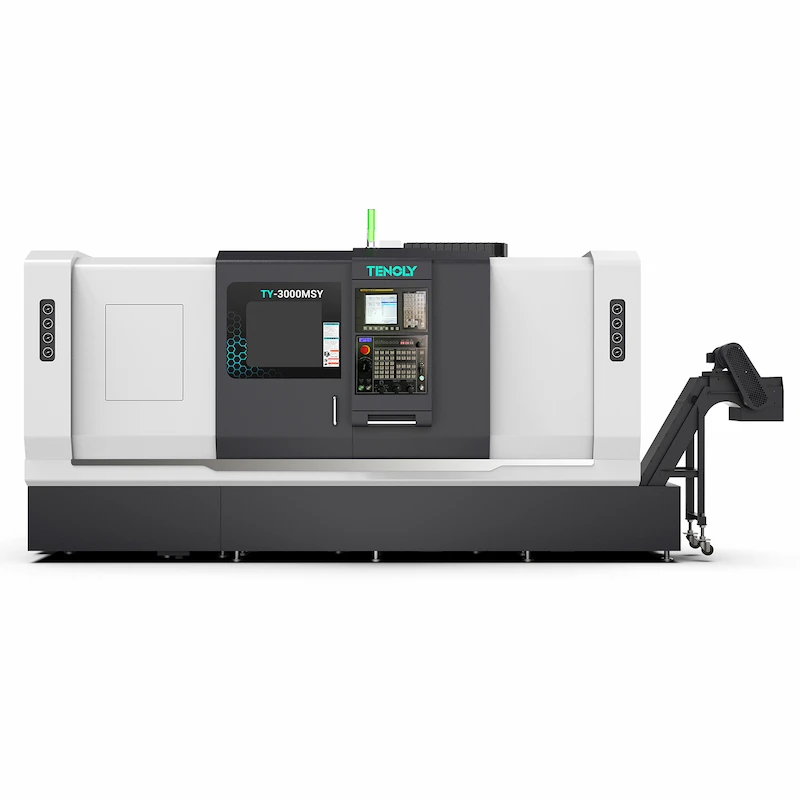
Standard CNC lathes handle only basic turning operations. However, if your orders involve complex processes like side drilling, milling, or eccentric profiling, a turn-mill center equipped with a live-tool turret, C-axis, and Y-axis is the ideal choice.
You should ask: What are the maximum spindle speed and power output? Can the machine perform high-precision C-axis contouring and eccentric Y-axis milling? What is the spindle runout tolerance (e.g., is it within 0.002mm)?
3. Which CNC System And Core Electrical Components Are Used?
Your programmers and operators need a user-friendly system, while the machine’s longevity and reliability depend largely on the quality of its “nervous system” and electrical components.
You should ask: Which mainstream CNC systems are natively supported (e.g., Fanuc, Siemens, or Mitsubishi)? Are core components—such as servo drives, motors, and pneumatic parts—sourced from globally recognized brands to ensure easy local availability of spare parts?
4. How Does The Machine Tool Manage Thermal Deformation During Prolonged Operation?
Heat is arguably the biggest headache in precision machining. After hours of continuous operation, thermal expansion in the ball screws and spindle can cause subtle dimensional drift in your parts, ultimately resulting in a batch of scrap.
You should ask: Does the machine come standard with a spindle cooling system or high-precision pre-tensioned ball screws? Does it feature compensation mechanisms to maintain accuracy despite fluctuations in workshop ambient temperature?
5. How Does The Turret And Tooling System Perform?
Factors such as tool change speed, turret rigidity under lateral turning forces, and tool capacity directly determine how much productive time you gain each day.
You should ask: Does the manufacturer use a servo turret or a hydraulic one? How fast is the tool change? If it is a turn-mill center, does the live tooling deliver high output torque capable of handling heavy-duty milling tasks?
6. Is The Machine Ready For Future Automation Upgrades?
Faced with rising labor costs, more competitors are shifting toward “lights-out” manufacturing or unmanned workshops. If you don’t consider automation interfaces now, retrofitting the machine later will be extremely costly.
You should ask: Does the CNC lathe come with pre-configured electrical and structural interfaces for automation? Can it seamlessly integrate with bar feeders, gantry loaders, or collaborative robots?
7. What Do The Pre-Shipment Inspection Standards And Quality Reports Cover?
Before the equipment is packed and shipped, you need to see concrete proof of accuracy, not just rely on verbal promises from the sales team.
You should ask: Does the manufacturer calibrate the machine using laser interferometers and ballbars before shipment? Does the delivery include a detailed inspection report covering geometric accuracy, positioning accuracy, and results from actual test cuts?
8. What Are The Arrangements For After-Sales Warranty, Spare Parts Inventory, And Delivery Lead Times?
If a production line halts due to a minor part failure, every hour of downtime translates into a direct financial loss. Reliable warranty coverage and a transparent supply chain offer you peace of mind.
You should ask: What is the standard warranty period (e.g., does the comprehensive one-year warranty cover both mechanical and electrical systems)? What is the typical lead time for standard models? If a critical spare part is urgently needed, how fast is their overseas shipping?
9. What Technical Training And Remote Support Does The Supplier Provide?
Even with a high-quality machine tool, if your operators cannot master its advanced programming functions or are stumped by minor error alerts, the equipment will only operate at half its potential.
You should ask: Does the manufacturer provide detailed English programming manuals, operation videos, or online/offline commissioning support? If the machine suddenly triggers an electrical or software alarm, can their technical team assist with rapid troubleshooting via remote diagnostics?
10. When All Factors Are Considered, Is The Total Cost Of Ownership And ROI Truly Worthwhile?
The initial price quote is just the tip of the iceberg. Factors such as power consumption, failure rates, and scrap rates are what ultimately determine how much profit the equipment can generate for you.
You should ask: How energy-efficient are the hydraulic and lubrication systems? Considering its machining efficiency and durability, roughly how many months will it take to recoup the investment?
Final Thoughts
Selecting the right CNC lathe requires looking beyond flashy brochures and delving into the details of technical specifications and manufacturing processes. At Tenoly, we are committed to using robust structural designs, reliable high-performance components, and attentive engineering services to help your workshop achieve higher machine utilization rates and consistent machining precision.
If you are planning to upgrade your production line or seeking a customized turn-mill solution for specialized workpieces, feel free to contact Tenoly’s engineering team directly to obtain detailed machine specifications and a tailored ROI analysis.